
British Horror Films of the 1950s: The Birth of Terror
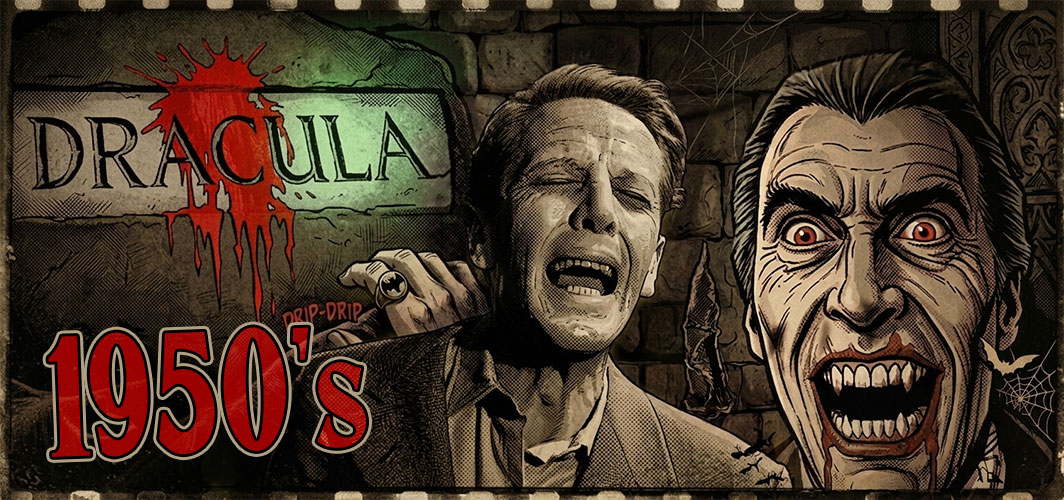
Whilst Horror has a rich history in the UK, it was during the 1950s that British horror truly began to take shape. Before this decade, the genre was segmented into a handfull of well established strands, such as stage‑bound Gothic stories like Dracula (1931) which had managed to become hugely influential in growing horror cinema, and imported American monsters such as the colossal Kong from King Kong (1933). However, by the end of the 50s, Britain had found a creepy, deep rooted, voice that would dominate horror for decades to come, and transform cinema in ways no one could imagine. Intrigued? Let us, for one moment, take a closer look at this dark chunk of cinematic history, by rewinding back to the 1950s of yesteryear, to see just how British Horror Films haunted the world with gothic chills, ghostly thrills and a touch of scientific wonder. Prepare for a scare... Here is British Horror Films of the 1950s: The Birth of Modern British Fear.
Censorship in the UK
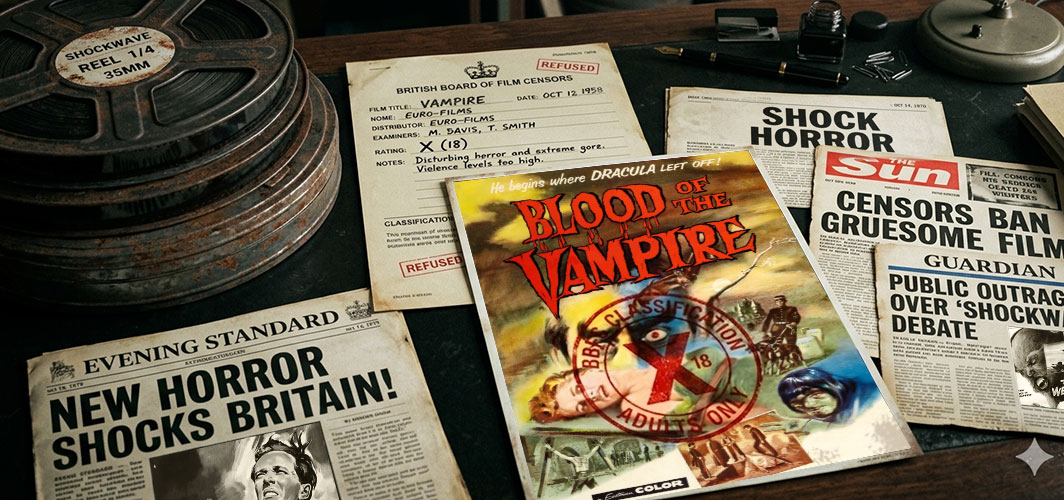
The post-war landscape of 1950s Britain was a un-consecrated breeding ground for horror, as the world of cinema began to change at an epic rate. The British Board of Film Censors (BBFC) had been the gatekeeper of British morality since the early 30's, but their goals had shifted from protecting children, to the more complex role of managing the growing amount of adult content. Previously, the BBFC had only a H certificate to mark Horror films, but as cinema broadened, it was necessary to create a new rating to label adult orientated movies, the X rating. It was designed to allow films with adult themes, not just horror, but also "serious" social dramas, to be shown to audiences aged 16 and over.
The BBFC intended "X" to mean "Adult/Sophisticated."
Post War Fears
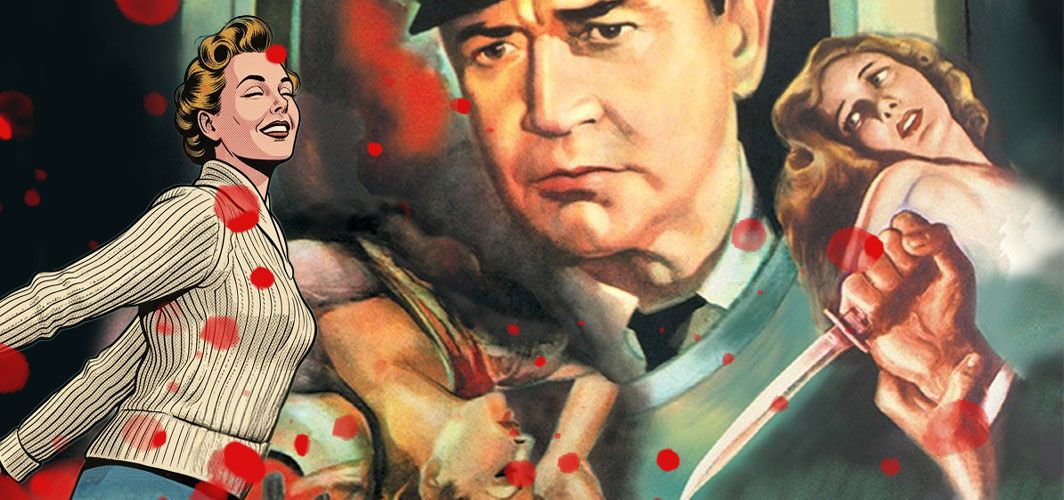
Cinema was changing and a large part of this was to do with the public perception of their evolving world. Britain in the 1950s was still coming to terms with the end of the Second World War, which had devastated so many lives, and horror cinema became a mirror of that darkening national mood. Bomb sites remained part of everyday life, rationing did not fully end until 1954, and trust in institutions had been bruised by years of conflict and propaganda. Yes, life in britain was gloomy despite that well known stiff upperlip. Unlike the grand flamboyance that would later define British horror in the late 1950s and 1960s, early post-war films often favoured atmosphere and psychological dread over other themes of horror. Fear was not presented as something alien or distant, but as something already woven into daily lives.
Take Vernon Sewell's understated supernatural B-movie Ghost Ship (1952) as a great example of this, where the horror is not born from monsters or spectacle, but from fractured trust, and the sense that the past has unfinished business. The vessel itself becomes a floating remnant of the war, carrying secrets that official inquiries failed to uncover and crimes that rational explanations tried to smooth over. The supposed haunting reflects a nation uneasy with easy answers, where technology, authority, and progress no longer guarantee safety from the dangers of the world. It was the start of films reflecting real world fears, like a messy sponge for society subconsciousness, and the results were striking. In a sense it was British inability to fully escape the shadow of conflict and all of the terrible things that had happened in the name of freedom.
Post War Science Fiction
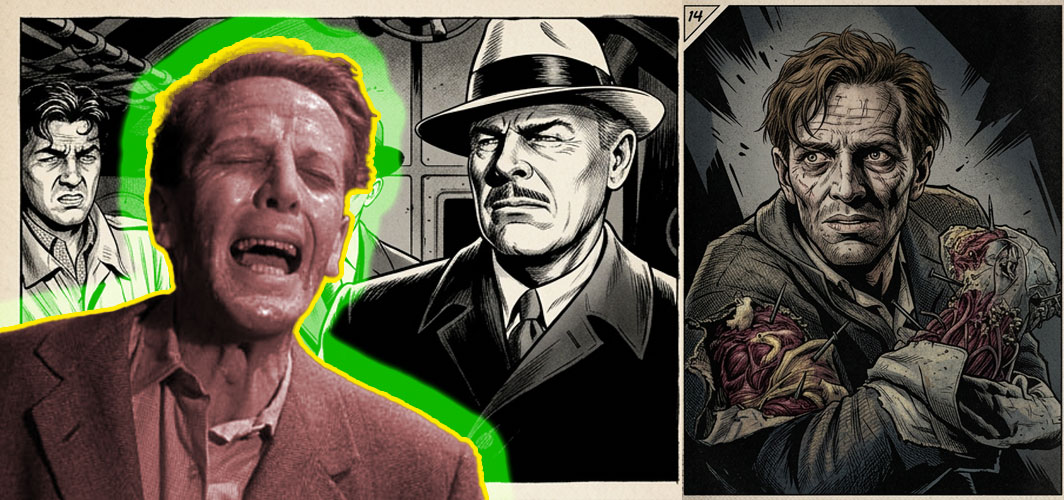
As the decade progressed, British horror frequently turned its attention to another growing public interest, science. To be more precise, it was science and authority figures, that create and controlled this rapidly growing sector, which were now under the microscope of cinematic creatives. Often portraying them as flawed or dangerous, this reflecting view of the new world science held a mirror to a post-war scepticism toward scientific expertise. In particularly scientific and governmental power, which had promised salvation through those gloomy war years, but also delivered unprecedented death and destruction. The Quatermass Xperiment (1955) is a prime example of this doubting view on the scientific world. The film presents science not as a noble pursuit but as something reckless and invasive, with catastrophic consequences for the poor public, once again being subjected to terror out of their own control. The transformation of an astronaut into a grotesque, barely human creature echoes fears of mutation, and the unknown effects of technological progress (with a little reservation towards nuclear fear). Released less than a decade after the real-world horror's of Hiroshima and Nagasaki, the film’s body horror feels especially loaded with the fears of nuclear raditaion. Nigel Kneale’s script refuses comforting answers in the face of mutant massacre, suggesting that humanity may not be equipped to handle the forces it unleashes. The Quatermass Xperiment was hugely on point for reflecting shared British sensibilities. Director Val Guest genuinely balanced the reality with the fiction, and the films closing moments compacted the overall post-war sentiment towards science. With the mutant menace finally beat, another rocket blasts off in to space. The answer to public fears were clear... you just can't stop progress, even in the face of destruction.
Horror Found Its Fangs
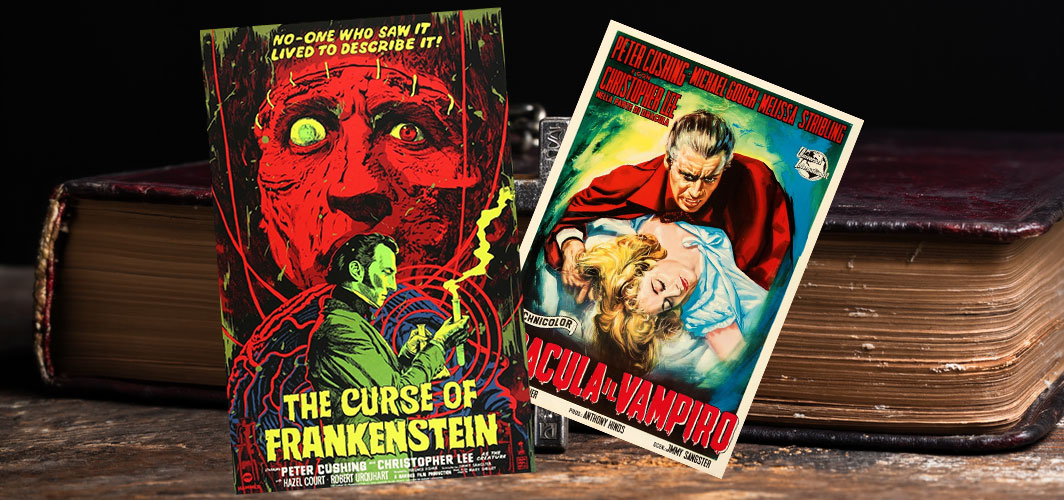
British audiences in the 1950s had lived through bombings, rationing, and mass death in the shadow of the worlds most terrorfying and destructive war. Now they were being asked to trust institutions again, even as the Cold War between America and the Soviet Union intensified, and atomic testing suggested the world could end at any moment. With a new fear drifting from across the sea, Horror films turned inward. A public shaped by paranoia, repression, and buried trauma had fresh nightmares to face. Within these growing shadows, Hammer Horror found its footing amongst the broken gravestones of cinematic history. Hammer Films had existed since the 1930s, but the studio found its identity in the mid-to-late 1950s with films such as The Curse of Frankenstein (1957) and Dracula (1958), Hammer didn’t just revive classic monsters; it reintroduced horror as something physical, sensual, and unsettling. These were not post war spooks, of mutant freaks of science, these were living breathing monsters.
Hammer’s Dracula (1958) drew heavily from Bram Stoker’s original novel, but filtered it through 1950s anxieties. Christopher Lee’s Count was no dusty relic. He was violent, sexual and almost entirely unstoppable (apart from a liberal flash of sunlight at the end of the film). Authority figures struggled to contain him, and traditional safeguards often failed. This was a film about a powerful man preying upon innocent men and women. He didn't have horns, or was rampaging monster, this was an everyday man, that was hiding a dark and terrorfying truth. Spoiler alert... he's a god-damned vampire!
Stoker’s themes of invasion, corruption, and fear of the unknown found new relevance here. In a decade obsessed with infiltration and the hidden enemies. Dracula became less about superstition and more about what happens when society’s defences break down. What if the walls built to protect us fell, or even worse, trapped the real horror inside... with us!
The Battle Against "Technicolor Blood"
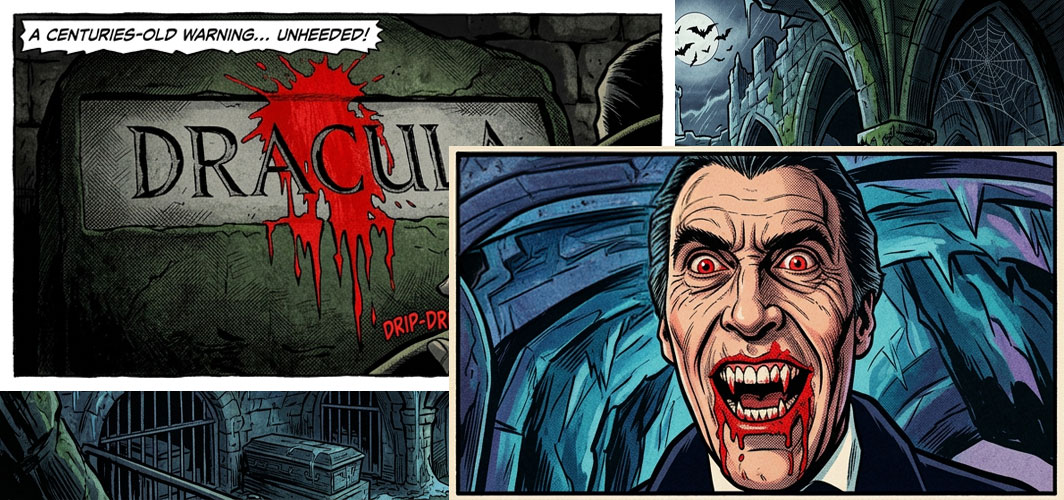
Whilst science was still a thorny subject, it was technology that pressed ahead, pushing cinema kicking and screaming into a brand new era, the age of COLOUR! When Hammer Horror transitioned to colour with The Curse of Frankenstein (1957), the BBFC faced a new problem, it was red, warm and dripping down the screen. Censorship rules that worked for black-and-white, where blood looked like dark syrup, didn't apply to the vivid red appearing on screen. Blood was no longer a vague black smear on the screen, it was dripping from the wounds, a smear across the knife and sprayed across the severed body part. The splash and splatter all became much harder to ignore for the agency that desperately fought for control of british entertainment. Hammer quickly sidestepped any finger pointing (and big rubber stamps) by using a red that was bright, theatrical and proudly artificial. This became lovingly known as "Kensington Gore", red enough to be blood, but clearly a bright artificial parody of the real thing. For cinema audiences in Britain, that shock was part of the fun. For the BBFC, it was a fresh censorship headache.
The BBFC’s old approach relied heavily on context, implication, and the assumption that audiences could be shielded by careful editing and censorship. A strangling in silhouette was one thing, torn skin, bloodied instruments, or a mutilated face was another. With horror now becoming more "in your face" the BBFC had to be more firm. This is why Hammer became such a useful test case for post-war British censorship. The studio was not making underground exploitation pictures. These were polished commercial productions, often beautifully lit by cinematographers such as Jack Asher, directed with style by Terence Fisher, and sold to mainstream audiences. That made them more difficult to dismiss. Hammer horror was sensational, yes, but it was also professional, popular, and hugely profitable. The result was a constant tug-of-war between Hammer’s showmanship and the censor’s scissors. And let's be clear here, whilst the public were spending their wages on popcorn and screams at the local theatres, they were NOT worrying about political shifts and growing global conflicts. The BBFC had a juggling act to keep the economical flow, whilst protecting the UK from dangerous imagery.
As all the monsters, creatures and spooks headed towards the end of the 1950s, British horror had changed forever. What began as a cinema of shadows, restraint and guilt, and along with post-war unease, British cinema had grown teeth, claws, fangs, and was splashed with a suspiciously bright splash of Kensington Gore. Black and white turned to colour, and Films like The Curse of Frankenstein (1957), The Quatermass Xperiment (1955), and Dracula (1958) proved that horror could speak directly to the fears of modern Britain. In a single century, cinema had confronted so many demons, from scientific arrogance, nuclear anxiety and the distrust of authority. It took those fears and then dressed them in Gothic capes, laboratory coats and blood-red make-up. By the time the decade ended, Britain had become one of the most important forces in horror cinema. Aided with studios such as Hammer, the crypt door was open, the censor was nervous, and audiences were more than ready to step inside.

Hey Horror Fans - it's clear that the 1950's was a real RIP ROARING period that CUT open the very fabric of horror theatre. It's very foundations are our current reality of genre cinema. It might not have been the most insteresting time when it comes to actual films, the comiung 1960s really opened the FLOODGATES for horror, it stands as one of the most impoartant foundation years. And it's for this reasons that we satrted here, in the shadow or war, amoungst the dust and GLOOM. Why not join the conversation in the commenst below.
Keep Rotten"
"Morti" The Mortician
(The Editor)
Recent Post


Follow Your Fear!
Special Features

Screams to Screens: Horror Legends in TV Commercials

Certainty Is The Monster: Why the Scariest House is Built by Your Own Mind

Rethinking The Terminator: How “John PRIME” Reshapes Sci-Fi’s Greatest Paradox

10 Creepy & Unsettling Websites Every Horror Fan Needs to Visit

American Horror Story 13: Returning Characters, Cast and Everything We Know So Far