
Top 10 Horror Movie Nude Scenes of the 70s
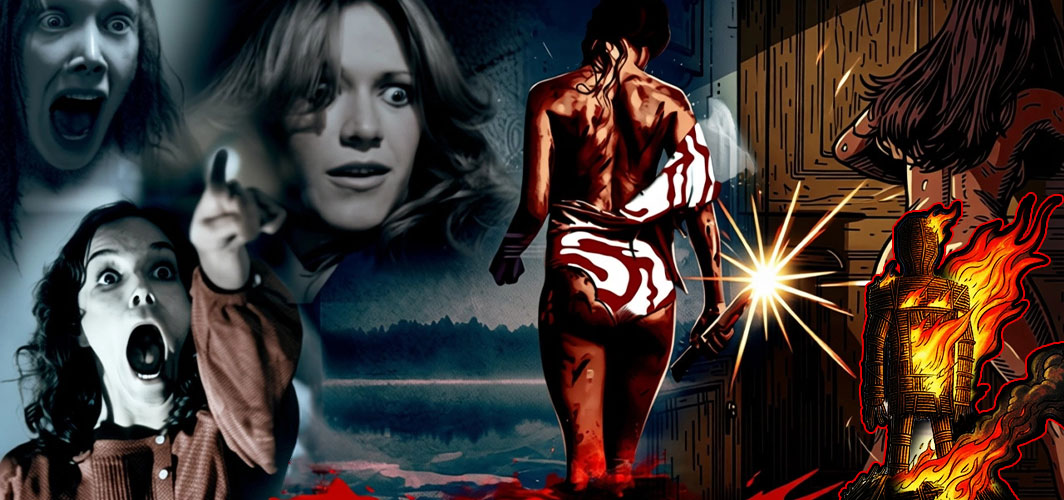
The 1970s changed cinema forever, especially if you loved horror. With traditional censorship completely crumbling worldwide, directors suddenly had free rein to push the absolute limits of gore, psychological mind games, and tempting naked flesh. But if you look past the sleazy grindhouse posters and sensational marketing of the era, you’ll find a much deeper history of true artistic risk and raw human vulnerability.
This article explores some of the most iconic, striking, and heavily debated nude scenes of '70s cinema. We're looking past the initial shock value to dive into what these scenes actually mean. From pure bodily horror, tasteless nudity, to raw festering grief. More importantly, we're pulling back the curtain on the behind-the-scenes stories to examine the critical, often overlooked perspective of the women at the center of the frame. Here are Top Ten Horror Movie Nude Scenes of the 70s.
Marilyn Chambers
Rabid (1977)
In David Cronenberg’s epic zombie/vampire -esq horror, Rabid (1977), Marilyn Chambers plays Rose, a motorcycle-crash victim whose experimental surgery leaves her with a blood-drinking stinger beneath her arm. The blood sucking femme fatale sparks a rabies/vampire outbreak across Montreal, as chaos reigns in her shadow. The temptress needs to get close to her victims, and so the film falls early into nudity.
Cronenberg originally wanted Sissy Spacek (who appears later in our list), but producers Ivan Reitman and John Dunning chose Chambers, then famous for Behind the Green Door (1972), believing her notoriety would help sell the film internationally, after all sex sells, and Chambers was a hot adult star at the time.
Her performance gives Rose a classic tragic vulnerability, twisting her nudity and seduction into something far nastier, as each blood letting encounter becomes an act of infection.
Chambers seemingly enjoy her first foray into real film, and she took the nudity in her stride. She said...
"It was great working with David... He taught me a lot of things that were very valuable as an actress, especially in horror films. I found it useful in sex films, too!"
Brooke Adams
Invasion of the Body Snatchers (1978)
Humanity faces annihilation In the classic terror of Invasion of the Body Snatchers (1978). The film follows Brooke Adams, who plays Elizabeth Driscoll, a young woman how discovers her boyfriend has been replaced by an alien "pod" person. Now he does the dishes and puts the trash out!
Adam's brings warmth and vulnerability to the film, making her eventual replacement by an alien duplicate especially cruel. Near the finale, Matthew (Donald Sutherland) finds Elizabeth’s naked pod-grown clone emerging from a greenhouse: initially serene and exposed, she suddenly points at him and releases the invasion’s unmistakable alarm shriek.
Directed by Philip Kaufman, the moment uses nudity to mark a change , rather than it being erotic. While some films of the late 1970s utilized nudity purely for shock, director Philip Kaufman and Adams approached this sequence from a strictly psychological plotpoint. When Elizabeth's clone fully exposes herself, it shows that the alien has absolutely no concept of human taboos, shame, or social boundaries.This is not a human, it's otherworldy.
Viju Krem
Bloodsucking Freaks - (1976)
In Joel M. Reed’s notorious grindhouse shocker Bloodsucking Freaks (1976), originally released as The Incredible Torture Show (1976), Viju Krem stars as Natasha Di Natalie, a ballerina abducted and brutalised by the sadistic showman Sardu. Her most prominent nude sequence turns a ballet performance into a forced striptease, underlining the film’s deliberately ugly fusion of theatricality, sex and violence. This is not a film you watch for the story, but for the vulgarity and nudity.
Unlike performers working in mainstream horror, Krem left little public comment on the role. Having also appeared in adult-oriented independent films, including Gerard Damiano’s Let My Puppets Come (1976), on-screen nudity was part of the exploitation circuit in which she worked. The film’s low-budget, deliberately outrageous style may have been camp on set, but its treatment of women remains as grimy and confrontational as its reputation suggests. If you feel a little dirty after watching this one.. try taking a shower!
Barbara Bouchet
Don't Torture a Duckling (1972)
Looking at a classic giallo now, with Lucio Fulci’s epic whodunit, Don’t Torture a Duckling (1972). Barbara Bouchet plays Patrizia, a sophisticated outsider whose sexual freedom makes her a target of suspicion in an insular southern Italian village. Her provocative nude scene, involving a local boy watching from outside, is designed less as erotica than misdirection. This scene serves a much larger social narrative rather than being purely for exploitation. Her nudity show her complete lack of regard for the town’s strict social and religious codes. In a movie centered around a serial killer targeting young boys, Fulci deliberately uses Bouchet's provocative, naked interaction with a child to make her the prime suspect in the audience’s mind, cleverly distracting from the real villians of the piece.
Bouchet was an established star who had already worked in Hollywood (including Casino Royale and Sweet Charity) before relocating to Italy, where she became one of the ultimate icons of the giallo genre. She treated nudity as a practical part of 1970s Italian genre filmmaking. The films scene caused severe legal and censorship issues in Italy upon release because it appeared to feature a naked adult interacting directly with a child. However, Bouchet has clarified that the scene was entirely an illusion of editing. She was never on set with the young actor while naked.
Bouchet's performance balances extreme, overt eroticism with deadpan, cynical intelligence.
Camille Keaton
I Spit on Your Grave (1978)
Probably one of the most controversial films on our list, I Spit on Your Grave (1978) follows Camille Keaton as Jennifer Hills, a writer whose brutal assault is followed by a calculated campaign of revenge against her attackers. Director Meir Zarchi’s wanted the film’s nudity to changes meaning across its two halves: initially a tool of degradation and humilation, it later becomes part of Jennifer’s strategy to reclaim back some of the power taken from her.
Keaton has spoken candidly about the shoot’s emotional strain, describing it as mentally exhausting even when she approached the work professionally. Though the film attracted fierce condemnation, including Roger Ebert’s infamous review where He famously called it a "vile bag of garbage" and a "movie so sick, reprehensible and contemptible that I can hardly believe it's playing in respectable theaters", it has since been reassessed by some viewers as a furious survival narrative. Keaton has remained proud of the performance, which helped define the rape-revenge horror subgenre while ensuring the film remains one of exploitation cinema’s most divisive titles.
Keaton Said in an interview ...
"When you're young like that, you can handle things better... Physically it wasn't that exhausting, it was more emotionally and mentally exhausting. It was just a job. If you're a professional, you do a job."
Soledad Miranda
Vampyros Lesbos (1971)
In Vampyros Lesbos (1971), the films vampire backdrop was used as a good excuse to put the sexy back in to the vampire story, with a good does of bisexual titillation.
Soledad Miranda plays Countess Nadine Carody, a cool, predatory vampire whose nudity is framed less as exploitation than as part of the film’s dreamlike, psychedelic style. Rather than shock or victimisation, the film uses her body as an extension of power, desire and eerie control. Miranda, working under the pseudonym Susann Korda, brought a quiet professionalism and intense screen presence to the role; tragically, she died in a car accident in 1970 before she could reflect publicly on the film’s legacy.
Director Jesús Franco’s was notorious for wanting as much naked flesh on screen as possible, but his working relationship with Miranda was deeply collaborative.
P.J. Soles
Halloween (1978)
Halloween (1978) pushed boundaries in many different ways. As the blue print for future slasher films, it also had the honour of introducing the world to the nude victim scene. For Halloween that privilege fell on actress P.J. Soles. The quirky young actress plays the "totally" cheerful, vibrant cheerleader Lynda Van Der Klok.
Unlike many other horror actresses of the 1970s, Soles’ experience with her nude scene was incredibly positive, completely unpressured, and deeply tied to the "family" atmosphere on set.
In an interview Soles said:
That is when I came up with that “see anything you like.” It was just a flash, but it was enough. In my mind, I was thinking, “This girl is in High School and she is in someone’s parents’ bed (laughs).” I did not want to do it too much. John loved it, he made you feel like you were really valued for your contribution.
Sissy Spacek
Carrie (1976)
Brian De Palma’s 1976 horror masterpiece Carrie features one of the most famous, agonizing, and heavily debated opening sequences in cinema history.
Sissy Spacek stars as Carrie White, a sheltered, deeply repressed high schooler who gets her first menstrual period in the communal school showers.
Sissy Spacek was 26 years old when she played the 17-year-old Carrie, having already gained critical acclaim for Terrence Malick’s Badlands (1973). She was deeply committed to character immersion, but the physical exposure of the opening sequence pushed her to her limits.
Spacek has been incredibly candid about how difficult the sequence was for her on a personal level. She didn't view nudity with casual indifference; it genuinely frightened her.
In a 2022 retrospective, she said:
"I'm very shy, and an introvert, so the Carrie shower scene was terrifying..."
Britt Ekland
The Wicker Man (1973)
Robin Hardy’s 1973 folk-horror masterpiece The Wicker Man brings us to one of the most infamous, complicated, and controversial body-double stories in cinema history.
Swedish actress Britt Ekland plays Willow MacGregor, the landlord's daughter and a pagan siren. Her legendary scene involves a hypnotic, rhythmic naked dance against her bedroom wall to "Willow's Song," an attempt to seduce and corrupt the deeply devout, celibate Sergeant Howie (Edward Woodward) in the next room.
Not only was Ekland dubbed but actress Annie Ross, but she also had a body double for the fully nude scenes, unbeknownst to the poor actress, who only agreed to top up nudity. This pissed off then-boyfriend Rod Stewart who tried to buy the original film negatives and block the movie's release.
Director Robin Hardy claimed that Ekland was fully aware of the scene's requirements but had personal body insecurities. He famously recalled her saying: "I've got an arse like a ski slope... you can't shoot it."
According to crew members, they shot Ekland scenes, then smuggled in a Glasgow nightclub dancer named Lorraine Peters to film the explicit lower-body writhing.
Britt Ekland was an established international sex symbol and serious actress, but when it came to The Wicker Man, her boundaries were completely crossed by the production team.
Ekland said in a recent 2024 interview:
"They just stuck a blonde wig on the body double. I couldn't believe it because Robin promised that he wouldn't do that. And the model's body looked nothing like mine... I was just devastated."
Julie Christie
Don't Look Now (1973)
Nicolas Roeg’s 1973 psychological horror masterpiece Don’t Look Now brings us to what is widely considered one of the most famous, artistically influential, and heavily debated sex scenes in the history of cinema.
Julie Christie and Donald Sutherland star as Laura and John Baxter, a married couple grieving the tragic drowning of their young daughter.
The resulting scene was so raw and graphic for 1973 that it sparked decades of rumors that the two actors were actually having unsimulated sex on camera, a claim both stars and the crew vehemently denied.
Christie admitted during a BBC4 show that she ‘loved’ making the film, adding:
“It was just flesh squirming and rolling and touching, and God I thought it was absolutely lovely.”
The 1970s horror scene treated nudity in very different ways, sometimes as art, sometimes as shock value, and sometimes as a bit of old-school film industry cheek. For actresses like Sissy Spacek, Brooke Adams and Julie Christie, it was often tied to character, fear and emotion rather than sex appeal. P.J. Soles brought a more laid-back, playful energy to Halloween (1978), while Barbara Bouchet treated nudity in Italian giallo films as just part of the job... the cinematic equivalent of clocking in and trying not to spill your espresso down your nice white top.
Behind all the lurid posters and scandalised headlines, these performances were often shaped by real craft, real pressure, and in some cases, the kind of studio behaviour that deserves a little more accountabilty than they had, way back in the good old 1970's.
More Horror Content
NSFW HORROR HUB
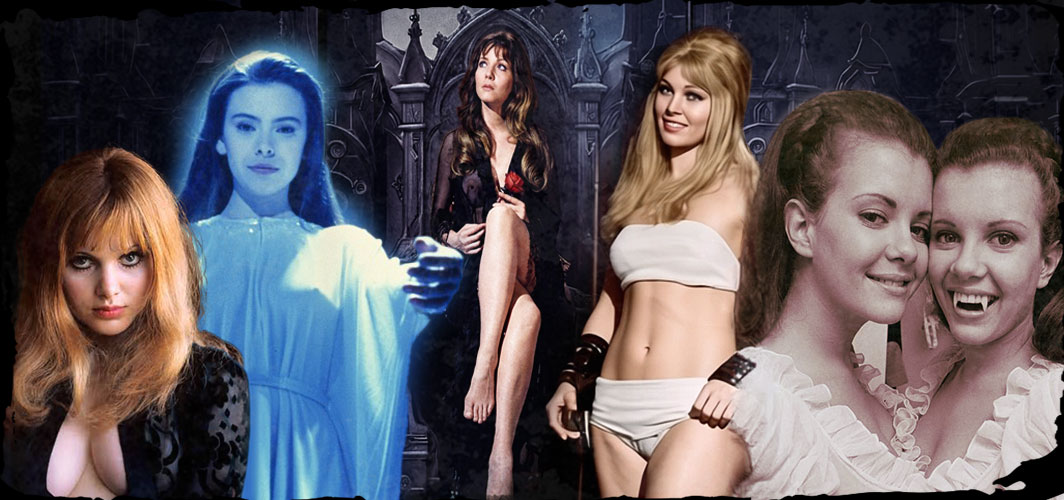
Ultimate Guide to Cult, Erotic & Exploitation Horror. Explore more cult horror tropes and boundary-pushing breakdowns on our NSFW horror hub.
Hey Horror Fans - Well, that’s enough to make my head explode like a shotgun to a water melon
From Carrie to I Spit on Your Grave, it’s clear these scenes were never just about flesh for the sake of it , they were often about fear, power, performance and the odd studio trickery that would make even the undead raise an eyebrow. If you’ve got your own thoughts, favourite examples or absolute horror horrors, drop into the comments and let us know.
Keep Rotten"
"Morti" The Mortician
(The Editor)
Recent Post



Follow Your Fear!
Special Features

Horror Death Scenes: DeepStar Six – Death by Decompression

Screams to Screens: Horror Legends in TV Commercials

Certainty Is The Monster: Why the Scariest House is Built by Your Own Mind

Rethinking The Terminator: How “John PRIME” Reshapes Sci-Fi’s Greatest Paradox

10 Creepy & Unsettling Websites Every Horror Fan Needs to Visit