
What Happened to MARS ONE — The Terrifying One‑Way Trip to Mars
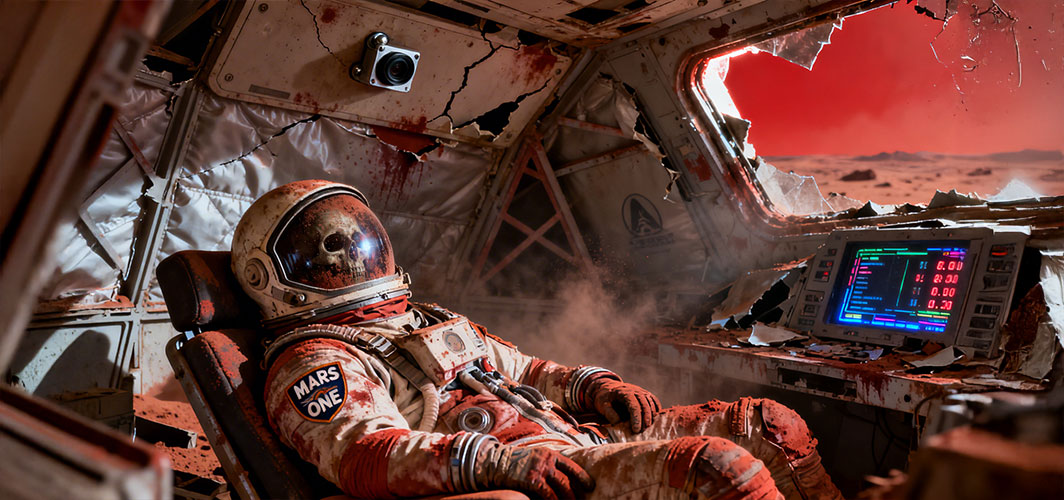
Bold promises. Reality‑TV money. Volunteers signing away the chance to come home. For a brief, fevered moment in the 2010s, Mars One sold the world a proposition that read like a dystopian science‑fiction pitch and, at its worst, resembled a horror film: humans would leave Earth to die on Mars while cameras rolled. We follow the money and the madness to answer: What Happened to MARS ONE — the terrifying one‑way trip to Mars?
Mars One began in 2012 as a small Dutch initiative led by Bas Lansdorp and Arnold Wielders. Publicly, it presented a deceptively simple roadmap: send robotic precursors to Mars, land habitats and supplies, and then ship crews of colonists on one‑way trips to found a permanent settlement. Funding would come mainly from media rights and a reality‑TV model that would document selection, training and the settlement itself. The plan was stripped down to an attention‑grabbing core: someone would volunteer to never return, and the world would watch. This was a twisted version of The Truman Show (1998) married to the cosmic abandonment of The Martian (2015) , but with none of the engineering competence or eventual rescue.
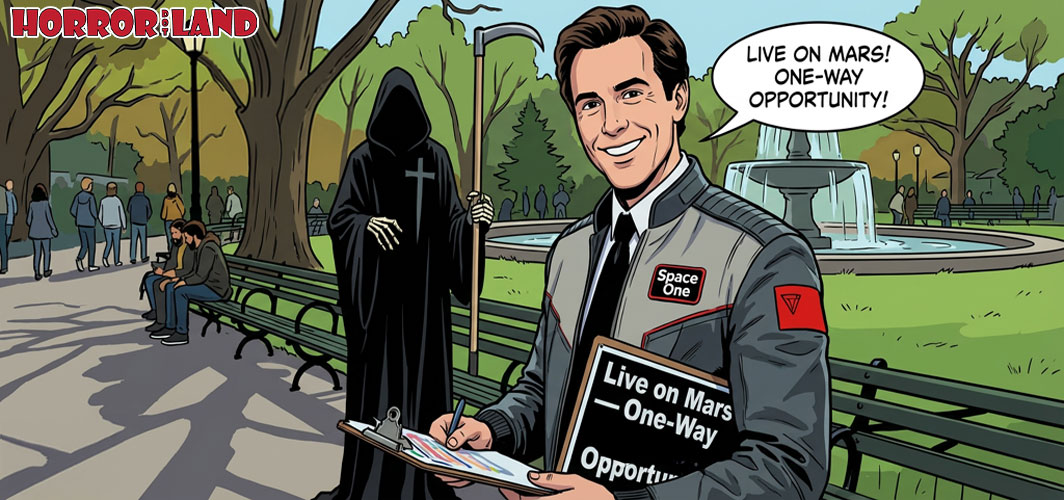
That core idea is what makes the story so unsettling. The ethical implications of recruiting volunteers for a permanent, unsupported life on another planet are stark. When you think about it, it was a proposal treating human lives as entertainment collateral. The idea that a global audience could gleefully cheer a one‑way mission while contestants accepted the risk of dying far from Earth turns the romance of exploration into something cold and exploitative. Framed as spectacle, this was not just ambitious... it was harrowing.
Beneath the spectacle, the project lacked the essential bones of a serious space endeavour. Mars One was not an aerospace manufacturer. It ran as two legal entities, the not‑for‑profit Mars One Foundation managing the project and the for‑profit Mars One Ventures AG handling commercial activities, but it did not build rockets, habitats or life‑support systems. Instead, it paid contractors for concept and feasibility studies, and repeatedly shifted timetables as funding failed to materialise. Lockheed Martin and Surrey Satellite Technology produced early concept work, but these studies never matured into contracts for actual hardware. SpaceX had no contracts with the organisation; proposed launch plans were speculative at best.
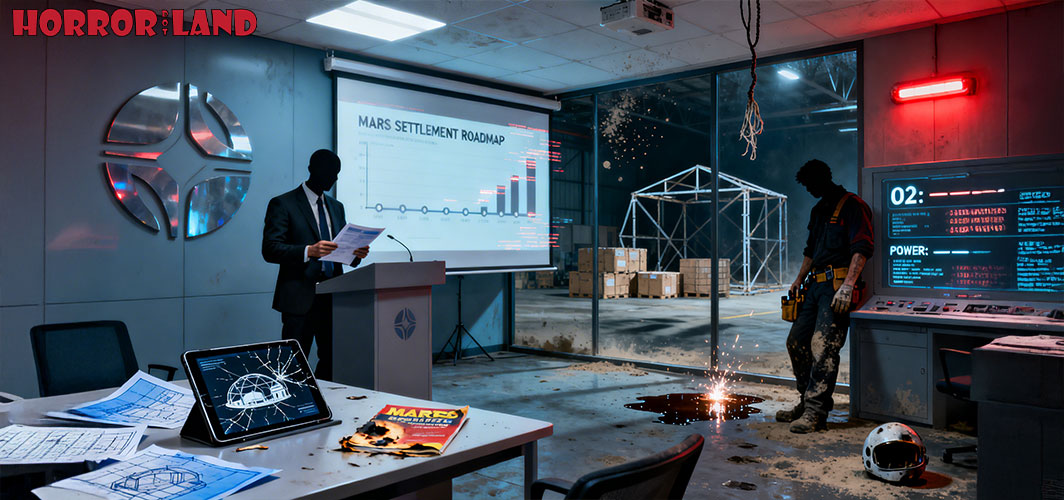
Technical criticism came fast and unambiguous. Independent assessments — most notably a space‑logistics analysis by researchers at MIT — concluded that the engineering and logistics needs were vastly underestimated. The MIT study calculated that spare parts, maintenance needs and reliable life‑support would require far more mass, launches and money than Mars One claimed. Their scenarios suggested catastrophic failure of environmental control systems within weeks under conservative safety regimes, a finding that transformed the project in many eyes from ill‑conceived to potentially lethal. In short: the mission plan did not adequately solve how people would stay alive on Mars for years, let alone the rest of their lives. Mars One started to read like a sci‑fi corporate villain in the making, think Aliens (1986)’s Weyland‑Yutani Corporation or RoboCop (1987)’s Omni Consumer Products (OCP).
Financially the project relied on a fantasy. Mars One repeatedly touted a figure in the low billions for some aspects of its one‑way scenario, but aerospace specialists and space policy experts said realistic costs would be orders of magnitude higher, especially if the mission were to include adequate redundancy, spare parts and robust life‑support. The suggested business model centred on global broadcasting rights, merchandising and sponsorship; yet no major, binding TV deals were ever secured. A hoped‑for reality TV cash cow never appeared, and the organisation’s revenues came largely from small donations, merchandise and application fees. Reports compiled over the years show under a million dollars raised through donations and crowdfunding campaigns, while tens of millions were estimated to have been collected overall in funding attempts — nowhere near what was needed for a truly safe, sustained effort.
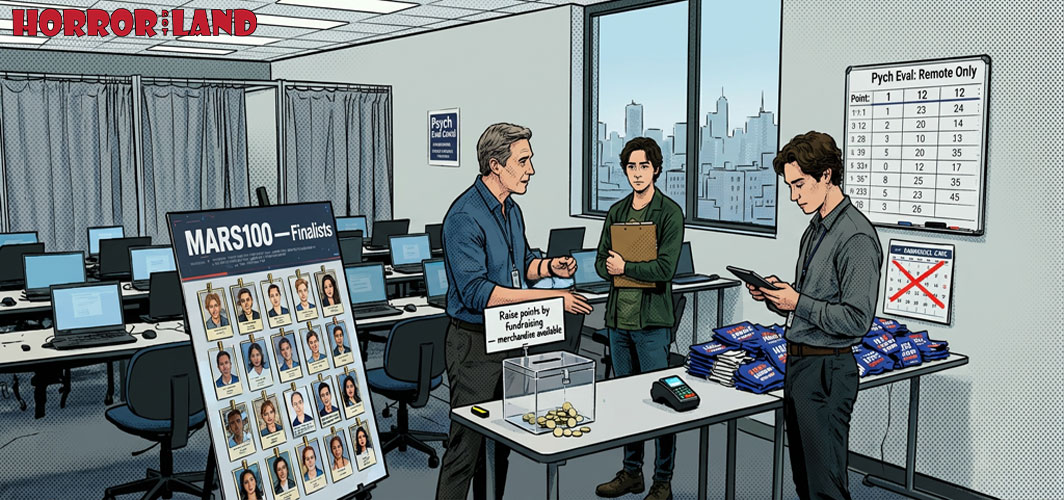
Concerns extended beyond engineering and budgets to selection and ethics. Thousands of people expressed interest, and the org produced a shortlist of finalists known as the Mars 100. Some finalists later alleged misleading practices. One finalist, Joseph Roche, who holds doctorate degrees, publicly raised alarm that the selection process was gamified around fundraising and donations, and that finalists were pressured to give money or raise funds. Psychological screening and the thorough, repeated in‑person testing normally required of long‑duration astronaut candidates were largely absent; many interviews were remote and brief. For a mission that proposed permanent exile, the lack of rigorous ethical safeguards and medical and psychological vetting was chilling.
Over time the cracks grew into a collapse. The organisation repeatedly deferred launch dates. Initial robotic mission targets slipped from 2020 to later years; crewed departures crept from the mid‑2020s into the 2030s and beyond as funding and technical partners failed to materialise. The final blow came in early 2019 when Mars One Ventures AG was declared bankrupt in a Swiss court and dissolved. Court records and reporting put the company’s cash holdings at under $25,000 and total debts around the low millions. With the for‑profit arm liquidated, the public chapter of Mars One was effectively closed.
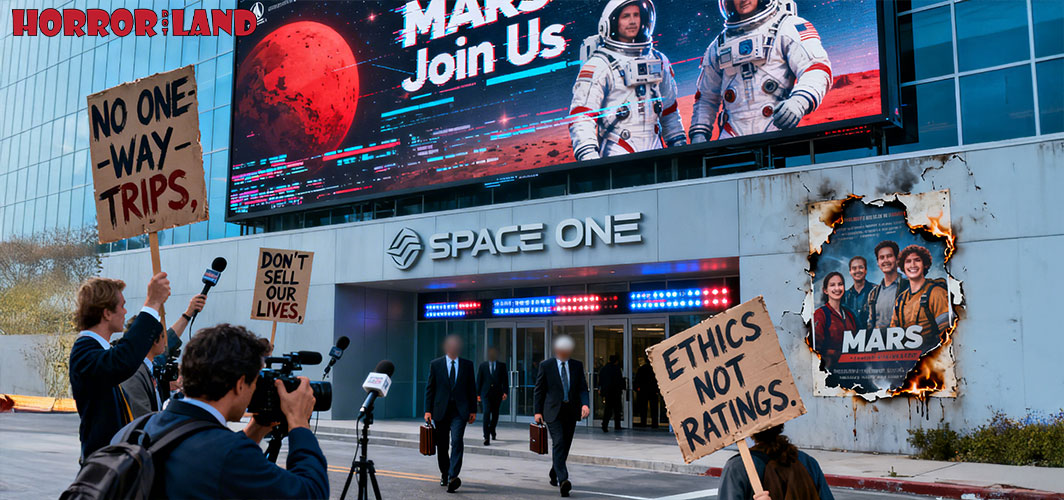
Public and expert reaction to Mars One ranged from incredulity to moral outrage. Space policy experts called the scheme implausible at best and a scam at worst. Many in the aerospace community described it as dangerously naive; a number of former astronauts, academics and engineers warned the project’s timeline and budget were grossly inadequate. Even some advisers and proponents who supported the idea of human settlement on Mars dismissed Mars One’s specific business model and technical footing.
The image that remains from the Mars One saga is cinematic, a reality‑TV casting call for exile, a hopeful poster for human daring running headlong into cold physics and economics. That cinematic quality is why the story feels like a horror film: the slow realisation that something framed as adventurous was actually reckless and potentially fatal. Unlike the polished horrors of fiction, however, Mars One was real enough to raise real ethical questions about informed consent, media monetisation of human risk, and the responsibility of organisations that recruit volunteers for life‑and‑death endeavours.

What remains as a takeaway is twofold. First, the dream of humans living on Mars is not inherently monstrous, it is one of humanity’s enduring frontiers. Second, Mars One’s collapse is a warning: the route to Mars requires painstaking engineering, enormous funding, careful ethical oversight and decades of incremental testing and demonstration. The exploitation of aspiration for short‑term attention or profit can turn that dream into something far darker. If humans are to settle another world, it must be done with the competence and care that ensure settlers are not simply cast into a real‑life horror show.
But for me, I can't get this vivid image out of my head, of some poor, miss guided, influencer, frozen in place on mars, slumped on chair in thier cracked space suit. A single camera, bolted to a warped interior panel, its lens smeared with dust, starring down upon their decimated corpes, sending live footage of the a ruined habitat, half‑collapsed under fine red grit, all across the world. A chilling reminder of mankinds reach verus his ability. A lonely, terrible death frozen and caught on camera forever.

Hey Horror Fans - This list is PULSATING with some pretty loose flappy bits. Have you seen all these films? Hows your stomach feeling? A little ROUGH? Let us know in the comments below.
Keep Rotten"


