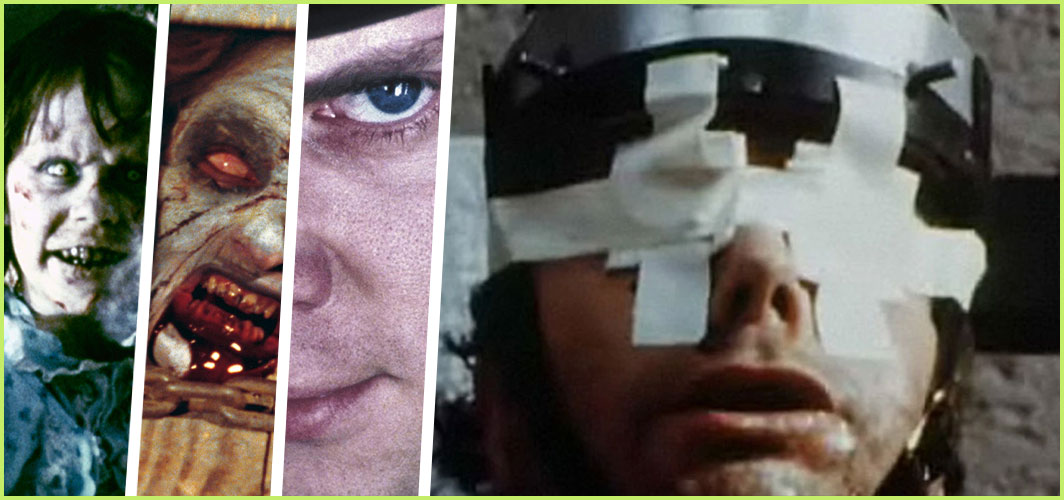
Love Hurts More After Death: Grief and Rebellion in Return of the Living Dead 3 (1993)

If Return of the Living Dead (1985) is the punk gig where the amps catch fire and everyone decides to dance anyway, then Return of the Living Dead 3 (1993) is the afterparty where someone cries in the bathroom, gets a piercing, and makes a truly terrible life choice out of love. It’s darker, angrier, sexier, and deeply miserable, and that’s exactly why it works.
This is the sequel that confused a lot of people, annoyed others, and quietly became one of the most emotionally brutal zombie films of the 1990s. No jokes about morticians. No naked punks in graveyards. No slapstick screaming. Instead, we get doomed romance, body horror, grief you can’t outrun, and zombies that feel everything.
And yes... it’s absolutely a Return of the Living Dead film. It just hates you a little more.
From Punk Rock Apocalypse to Tragic Body Horror
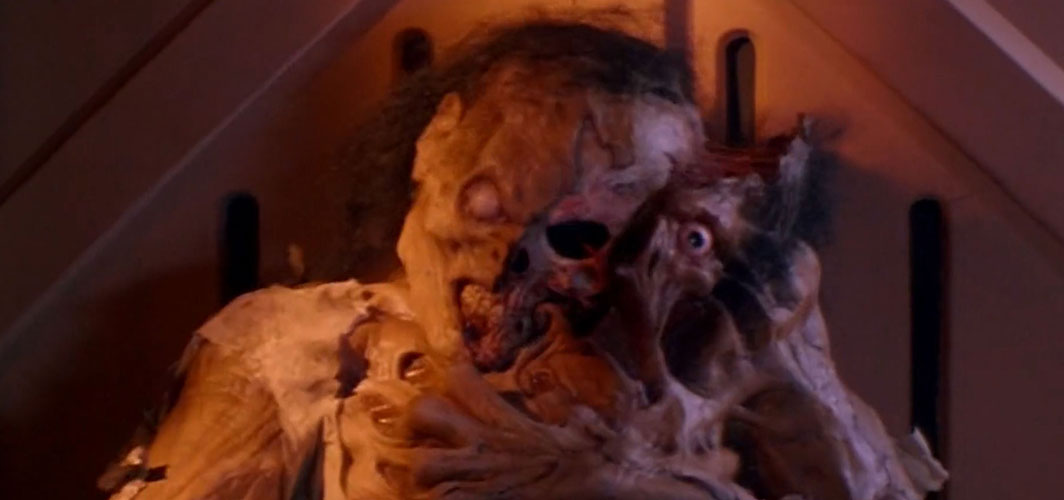
The first Return of the Living Dead (1985) remains untouchable as an ‘80s horror comedy classic. Smart zombies. Fast zombies. Talking zombies. Zombies who eat brains not because they’re hungry, but because it dulls the agony of being dead. It’s the end of the world played like a party you know you shouldn’t be enjoying, but you are anyway.
Return of the Living Dead Part II (1988) leaned hard into that energy, scrubbing off most of the gore and turning the whole thing into something that’s almost family-friendly. It even reused James Karen and Thom Mathews as basically the same characters with new names (and they were welcome faces), because why not? Their characters, Ed andoey, even joke about how the dead coming alive (and the cemetary) feel awfully fanilier.
Then Return of the Living Dead 3 (1993) shows up, dressed in black, chain-smoking in the corner, and absolutely refusing to tell a joke. No returning cast. No comedy-first tone. No recycling the same plot beats. For many fans, that made it feel like the odd one out. For others, especially those who found it at the wrong (or right) age, it hit like a spiked glove to the chest.
Same Rules, Different Kind of Suffering
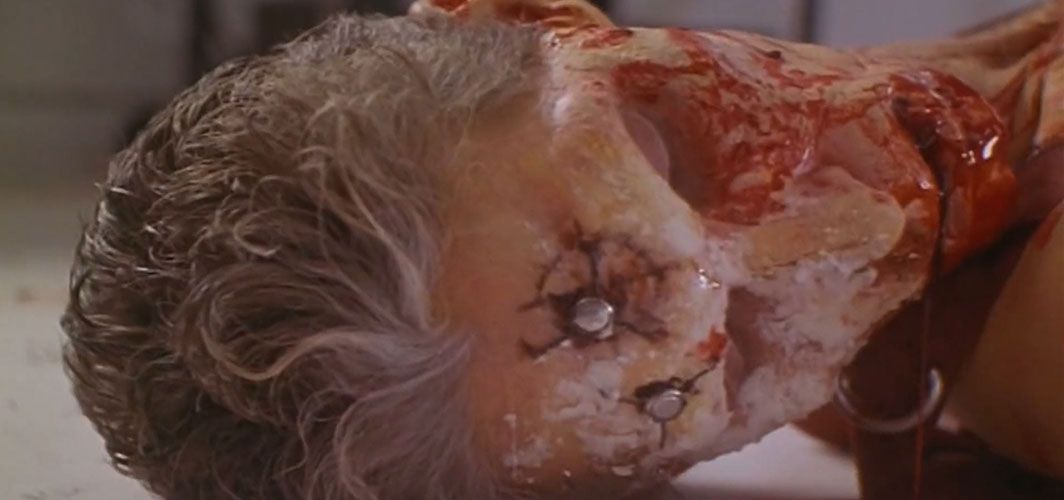
Here’s the key thing fans miss: Return of the Living Dead 3 (1993) obeys all the franchise rules. The zombies are still conscious. They’re still in pain. They still understand what’s happening to them. That single detail is what makes this story possible and what makes it devastating.
Director Brian Yuzna and writer John Penney didn’t try to remake the original. They inverted it. Instead of laughing at the end of the world, this film stares at grief and says, “What if you just… refused to accept it?”
The answer, unsurprisingly, is: everything gets worse.
Love, Loss, and Extremely Bad Decisions
Curt and Julie are teenage lovers in full rebel mode. No plans. No future. Just loud music, bad choices, and that intoxicating belief that love alone is enough. Unfortunately, Curt’s father happens to be working on a military project involving weaponised zombies (because of course he is) and Curt is about to be dragged away from Julie for good.
They try to run.
Julie dies.
Curt refuses to accept it.
That’s the entire emotional engine of Return of the Living Dead 3 (1993). Death isn’t something to mourn here, it’s something to fight, deny, and claw against until it destroys everyone involved. Life itself becomes an act of rebellion, even when it’s no longer sustainable.
If the original film said, “We’re all doomed, so let’s laugh,” this one says, “We’re doomed and I’m not letting go, even if it kills us both.” And Spoiler alert: it does.
Pain, Pleasure, and Very Pointy Aesthetics
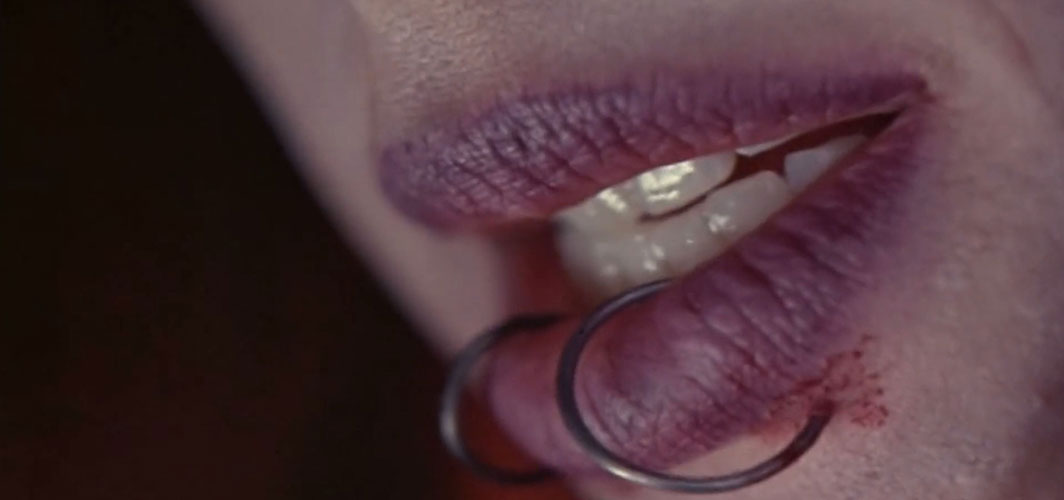
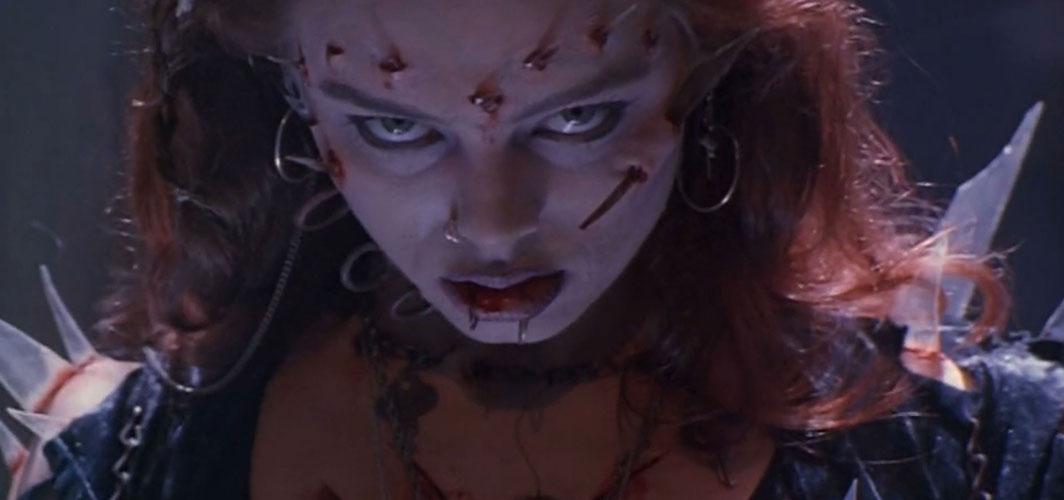
As Julie returns from the dead, she learns the franchise’s cruelest rule: pain keeps the hunger away. In the original film, zombies eat brains to ease their suffering. Julie flips that idea inward. She mutilates herself with piercing, cutting, embedding weapons into her own body, not for fashion (although it does look very 1993 chiche ), but survival.
The result is one of the most striking zombie designs of the decade. Julie’s transformation turns body modification into both armour and self-harm, blurring the line between control and surrender. It’s erotic, disturbing, and tragic in equal measure.
Yes, the comparisons to Hellraiser (1987) are unavoidable, chains, flesh, desire, pain, but this isn’t a knock-off. Both films are pulling from the same cultural nerve: the idea that love and suffering are dangerously close neighbours. Sometimes they share a bed.
Melinda Clarke: The Secret Weapon
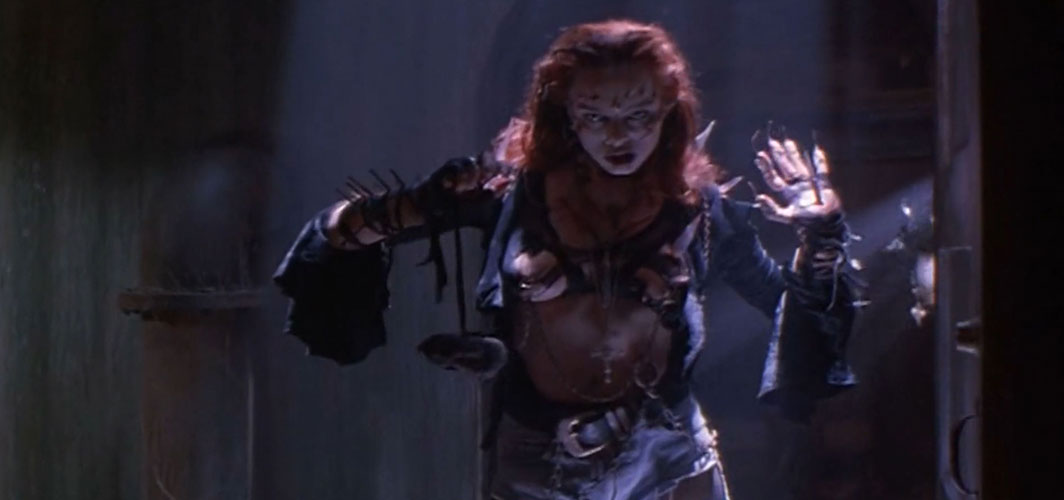
Melinda Clarke gives a phenomenal physical performance as Julie. Her movements shift after death. more animal, more fluid, like she’s learning how to exist all over again in a body that actively hates her. One moment she’s predatory, the next heartbreakingly fragile.
There’s a particular shot where she emerges fully transformed, uncoiling into frame, and it’s unforgettable and most probabbly the scene most horror fans remember. By that point, Curt’s refusal to leave her behind has crossed from devotion into self-destruction. Love and pain are no longer separate concepts. They’re the same thing.
Which, frankly, is very on-brand for teenage romance.
Grief You Can’t Outrun
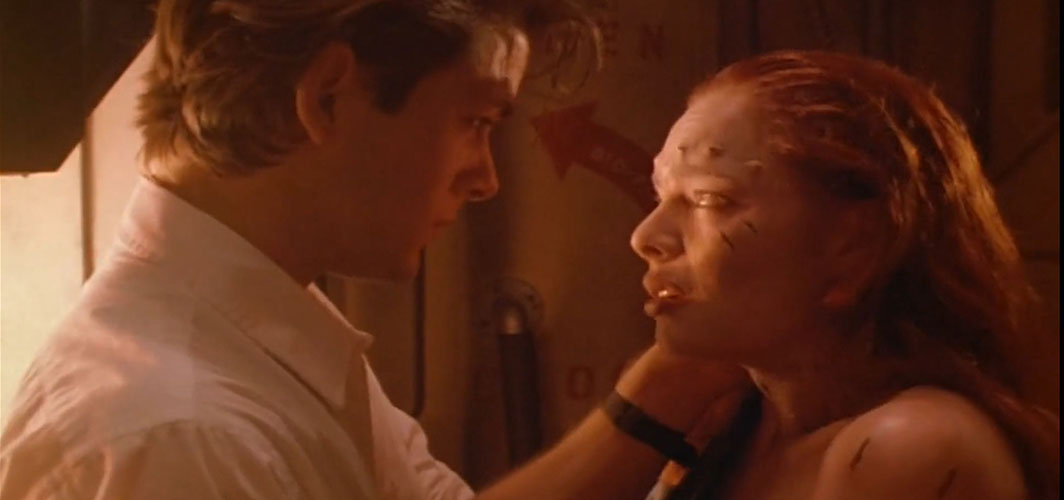
Beneath the piercings, the wounds, and all that lovingly applied cinematic damage, there’s a quieter horror ticking away underneath Return of the Living Dead 3 (1993) — the kind that doesn’t splash the screen but settles in your chest. Early on, Curt’s father casually mentions Curt’s dead mother. It plays like background noise, an offhand detail you’re not meant to linger on, until you realise it explains everything that follows.
This is a family that doesn’t mourn. They compartmentalise, deflect, and keep moving, hoping grief will get bored and leave them alone. Curt inherits that coping strategy wholesale. When Julie dies, he doesn’t process it, he negotiates with it. He treats death like a problem to be solved rather than a reality to be faced.
So he watches her die. He watches her come back. He knows something is deeply wrong, that she’s dangerous to herself and everyone else, and still he cannot let go. His denial isn’t love conquering all; it’s grief left untreated, spiralling outward. Refusing to accept loss doesn’t save Julie, it just guarantees that the damage spreads, claiming everything in its path.
In the end.. Death Still Sucks!
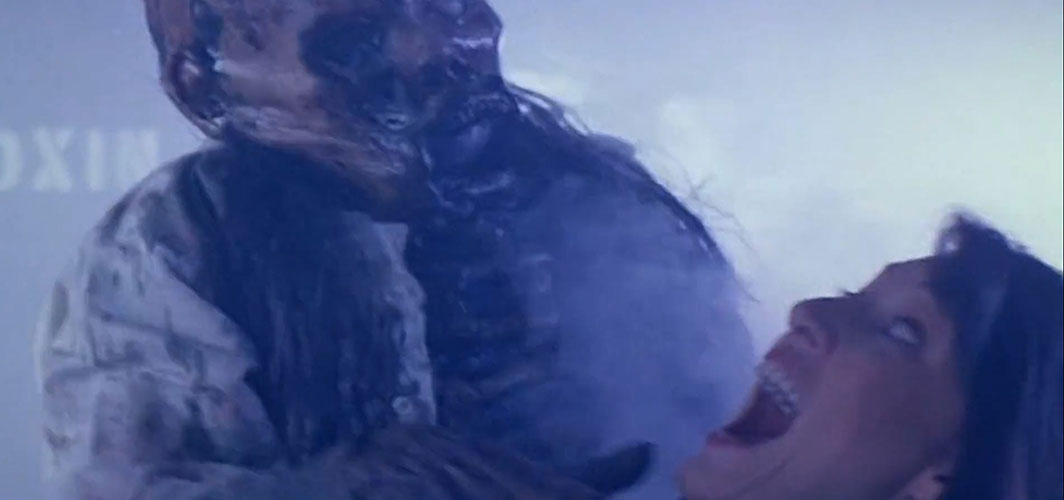
This film isn’t here to crack jokes or soften the blow. It wants to leave a bruise, and it does. Return of the Living Dead 3 (1993) takes the franchise’s cruel rules and stops laughing at them, forcing them through love, grief, and the kind of teenage defiance that feels noble right up until it ruins everything.
Like The Fly (1986) or Near Dark (1987), it understands that some transformations can’t be undone, no matter how much love you throw at them. This isn’t a sequel trying to relive past glories, it’s one that challenges the spirit of the original head‑on, trading gallows humour for inevitability.
Instead of repeating the original, the film pushes back against it. Where the first movie laughed in the face of extinction, this one stares it down and refuses to blink. It asks what happens when rebellion isn’t loud or funny anymore, but desperate and unsustainable.
Sometimes the end of the world looks like a riot.
Sometimes it looks like holding on long after you should have let go.
And sometimes, the most punk thing you can do isn’t fighting death, it’s accepting that it already won.

Hey Horror Fans - Return of the Living Dead 3 was always the black sheep, but it worked well as part of the wider zombie universe. It might not have the humour that the first two films oozed, but there was other stuff dripping that caught out attention. It was icky in all the right places and had a solid story that flapped and ripped in all the right ways. What did you think. Scream loudly in the comments below.
Keep Rotten"