Dogman and 12 Jaw‑Dropping Crime Dramas Too Strange to Forget
When I first heard about the true‑life crime drama that became the movie Dogman, I thought I knew the limits of weird, but clearly I was wrong. Dogman opens the door to a world where loneliness, animal obsession and petty crime fuse into something quietly terrible and oddly tragic. And whilst this film alone is worthy of a deeper dive, I ran into a rabbit hole of other crime films that are equally weird, wonderful and waiting for audiances to dsicover (or re-visit).
And so.. we look at the bizarre Dogman movie plus a dozen other wildly strange crime dramas that bend the rules: crooked capers, small‑town nightmares and grotesque comedies that shock, amuse and linger. If you like your crime cinema a little weird, deranged and utterly binge‑worthy, then let me introduced to you our list.. Dogman and 12 Jaw‑Dropping Crime Dramas Too Strange to Forget.
Dogman (2023)
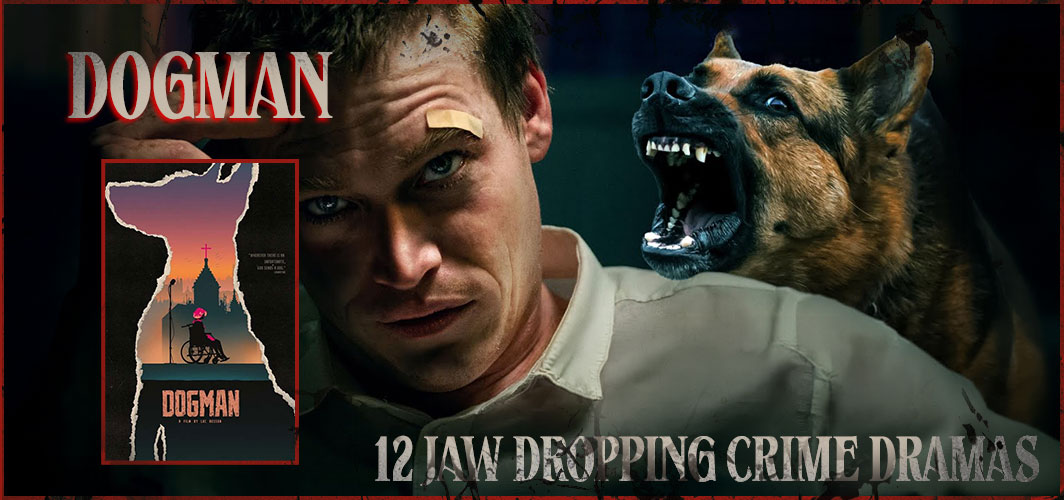
Director Luc Besson is better known for mainstream, highly stylised, action‑oriented work such as Léon: The Professional (1994) and The Fifth Element (1997). He typically prioritises striking visuals, slick cinematography and fast‑paced editing over conventional storytelling, giving his films a distinctive, kinetic impact. In 2023, however, he turned to a far stranger project: a film about a paraplegic who uses dogs to commit crimes and also performs as a drag queen.
The story follows Douglas Munrow (Caleb Landry Jones), a man traumatised in childhood and raised around dogs bred for fighting. Having formed an almost animal‑like bond with the mutts, Douglas learns to use them in jewel thefts and other illicit schemes, while supporting himself as a drag performer in a cabaret. Although the premise reads like dark comedy on the surface, the film hides deeper, more disturbing subplots at its margins. Psychological trauma and a profound lack of human connection have scarred Douglas; he navigates identity through performance, finds refuge and chosen family in the drag community, and forges a life outside conventional masculinity.
Dogman delivers a harrowing portrait of childhood abuse and the long, tangled work of trying to recover from cruelty. It’s a marked departure from Besson’s usual fare, trading blockbuster spectacle for an intimate, bizarrely tender examination of human connection and criminal desperation.
Drive-Away Dolls (2024)
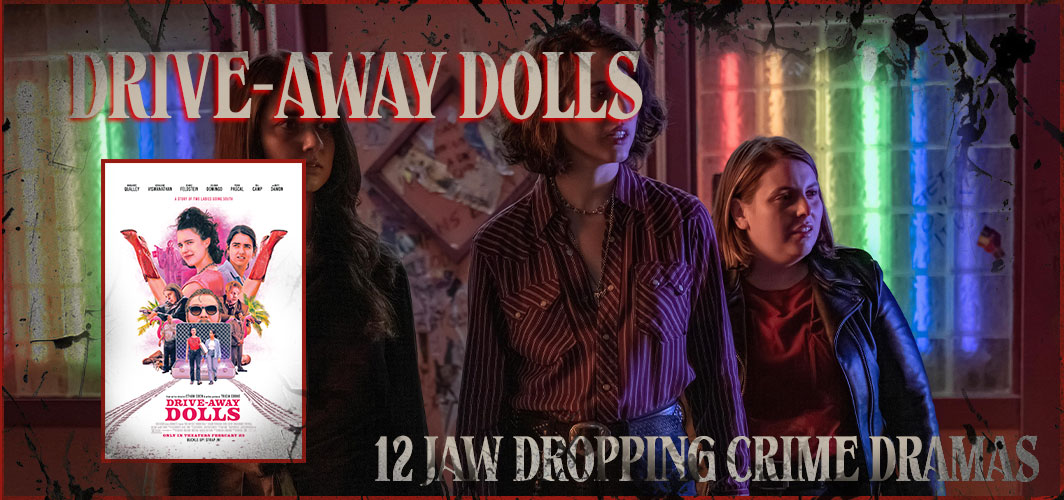
Ethan Coen is better known for his joint work with his brother Joel, but his first solo experdition is one filled with Lesbian love, a severed head and a breief case filled with dildos.
Drive-Away Dolls stars Margaret Qualley and Geraldine Viswanathan as two lesbian best friends on a road trip through the US east coast. An mess up at a car for hire buisness see's them driving off with a crime gangs belongings, a briefcase and severed head, and set off a chain of absurd misadventures.
With a mixture of dark humour, road‑movie whimsy and gross‑out shock, the pair negotiate kidnappings, political corruption and car chases in hope of having a freer life. Drive‑Away Dolls plays like an off‑kilter Coen/Scorsese mashup that is part crime caper and part sexual liberation romp, where the bizarre commodity at the story’s heart makes everyone dangerously vulnerable.
For a film whoes MacGuffin is a collection of scandalous plaster‑cast sex toys made from the genitals of powerful men, Drive-Away Dolls manages to be a highly enterting and fun film, even if it is quite bizzarre.
Roofman (2025)
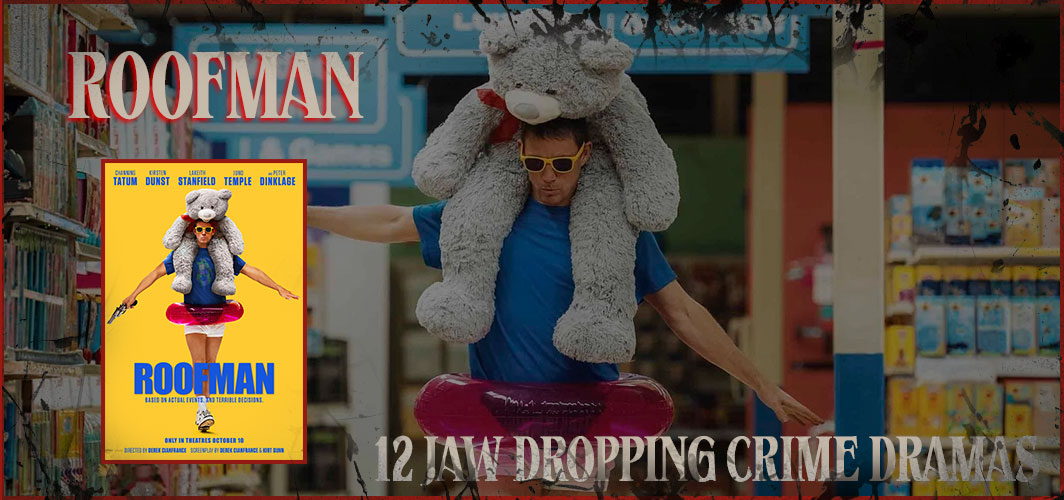
Roofman dramatises one of those true‑crime stories that reads like an urban myth: the daring, strange exploits of Jeffrey Manchester, a man who literally lived above his crimes. The film follows Manchester’s odd double life after he discovers how easy it is to break into fast‑food restaurants by crawling into ceiling spaces and quietly inhabiting the floors above. Manchester’s method turns petty theft into a sustained experiment in voyeurism and domestic trespass. Those scratching noise above you are not rats, but a ghost in the city’s rafters.
The film shows how Manchester, played by the gloriously charming Channing Tatum, would breaking in through the roof at night, meticulous planning and observation before drilling, hacking, or sawing through the roof of the target building. As the morning staff came in to start the day, Manchester would hold them up at gunpoint, escaping with the contents of the safe.
Whilst his spree of robberies were bizzare, the story gets weirder still. Manchester was arrested, at his daughters birthday party of all places, and sentanced to 45 years in prison. But the clever crminal managed to escape under a delivery truck, and then spent months hiding inside a Toys "R" Us whilst planning to rob the store. During these six months he was living isndie the store, Manchester burned down a Charlotte dentist's office, robbed robbed a pawn shop to acquire a gun, dated a local woman, and survived by living off of candy and baby food. It's crazy story filled with so many twists and turns that it's hard to really summarise juts how bizzare this tale is.
Falling Down (1993)
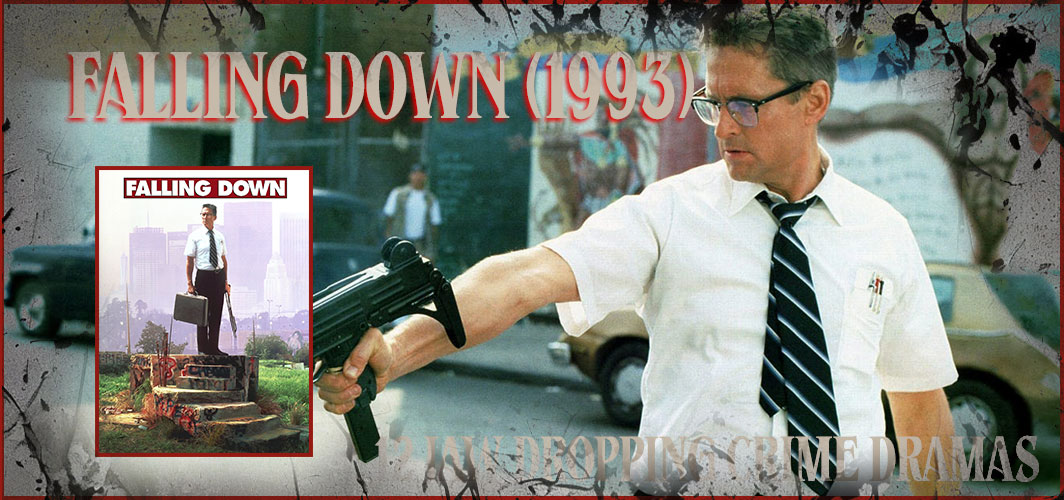
Falling Down is a blistering portrait of one man’s spectacular unravelling, think less Breaking Bad, more full‑on cracking‑up‑at‑the‑seams. Michael Douglas plays William Foster, an ordinary, exhausted office drone whose patience snaps after abandoning his stalled car in brutal Los Angeles traffic. What follows is a darkly comic urban odyssey: The film traces his journey across the city as petty frustrations; an overpriced soda, a confrontation at a fast‑food counter, the erosion of social courtesy, each encounter turning everyday annoyances into set pieces of escalating chaos. Falling Down mixes grim satire with dark humour, asking, with bleak wit, what happens when a man fed up with life decides to make a very bad day his mission.
What keeps Falling Down weird and unsettling is the logic that drives Foster: his protests feel simultaneously plausible and oddly monstrous. Joel Schumacher turns Los Angeles into a pressure cooker, nudging Foster from a reasonable rant to full blown violence. The film asks a blunt question, who is really at fault, the man or the system, without offering easy answers, and it makes you squirm as you watch him fall apart. Memorable set pieces, like the explosive Denny’s style showdown and the tense standoff at the pier, show how tiny annoyances can spiral into full disaster.
Falling Down is not your usual crime movie. It feels more like a modern fable about rage, loneliness and how thin polite behaviour can be, twisted between graphic violence, gun use and implied suicide. The film still divides viewers, some praise its raw power, others dislike how it treats its main character, but it sticks with you because it captures a worrying mood: when everyday life keeps grinding on someone, what happens if they finally snap?
Eating Raoul (1982)
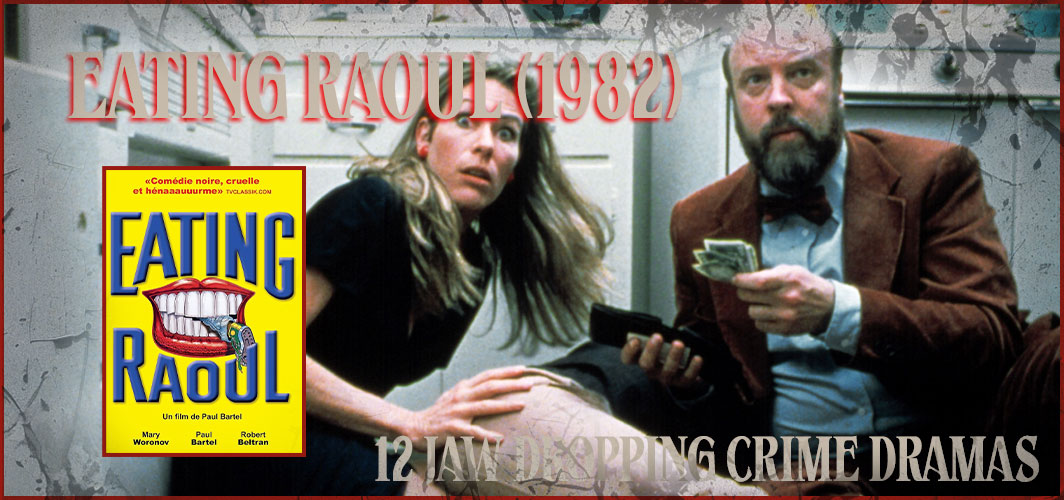
Eating Raoul is a gleefully savage little black comedy that treats midlife frustration like a business plan gone horribly wrong. Paul Bland is a prim, snobbish wine shop clerk and his wife Mary is a straight‑laced nurse; they live frigid, prudish lives in a building full of swingers whose noise and licence they despise. After Paul loses his job and a drunk swinger tries to rape Mary, Paul kills him with a cast‑iron frying pan. What begins as a panic‑driven cover‑up soon turns into an entrepreneurial criminal scheme: the Blands lure wealthy perverts, kill them when things go wrong, and pocket the cash.
The film delights in the contrast between the couple’s domestic properness and the grotesque practicalities of their murders. Mary advertises to fetish clients and brings men to the apartment, while Paul, mortified by sex, dispatches the victims with grimly earnest pragmatism. The plot thickens when Raoul Mendoza, a locksmith and petty thief, discovers a corpse and bargains his silence in exchange for a cut; his presence introduces temptation, betrayal and an escalating spiral of mayhem.
Eating Raoul pushes its satire to wild extremes. The Blands attempt to maintain household routines between killings,; cooking, cleaning and haggling over property, and the film mines this banality for deadpan laughs. As their plan grows bolder, alliances fray and a string of increasingly outrageous solutions to their money problems leads to one final, shockingly dark payoff that seals their fate and the future of their dream restaurant.
I Care a Lot (2020)
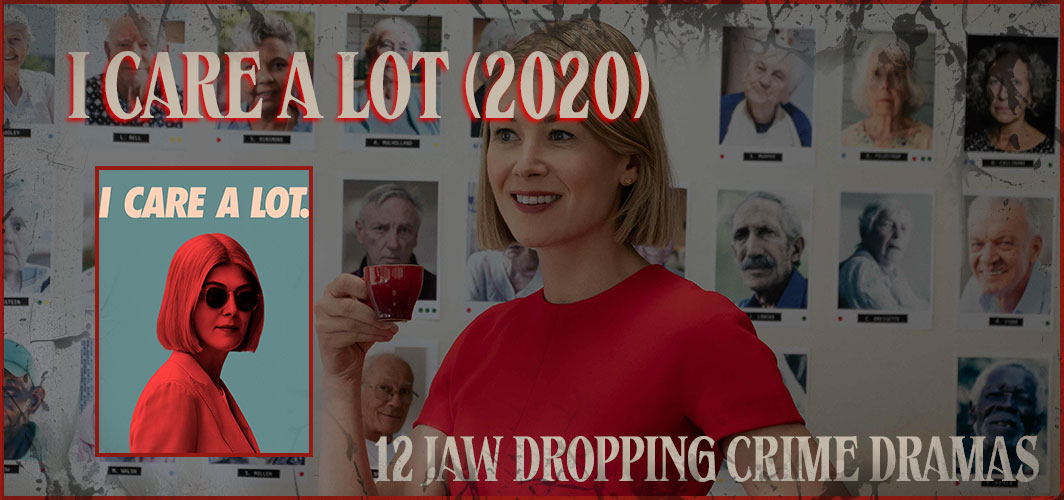
I Care a Lot is a darkly comic crime thriller about greed, corruption and how ruthless ambition can become an industry. Rosamund Pike plays Marla Grayson, a slick, morally numb court‑appointed guardian who manufactures cases against elderly people, has them placed in a drugged assisted‑living facility and sells off their homes and assets for profit. Her business model is efficient, clinical and utterly shameless.
Early on Marla and her business partner spot a wealthy woman listed as vulnerable and quietly file for guardianship. Once “protected,” the woman’s belongings are stripped, bank accounts cleared and property put up for quick sale. That theft looks like safe paperwork until Marla discovers jewellery and diamonds that belong to someone very dangerous. What follows is a nasty, fast‑moving game of escalation.
The film is sharp and satirical, with Pike giving a cold, magnetic performance that earned wide praise. It asks uncomfortable questions about who profits from vulnerability and how the law can be weaponised by those with no conscience.
Hudson Hawk (1991)
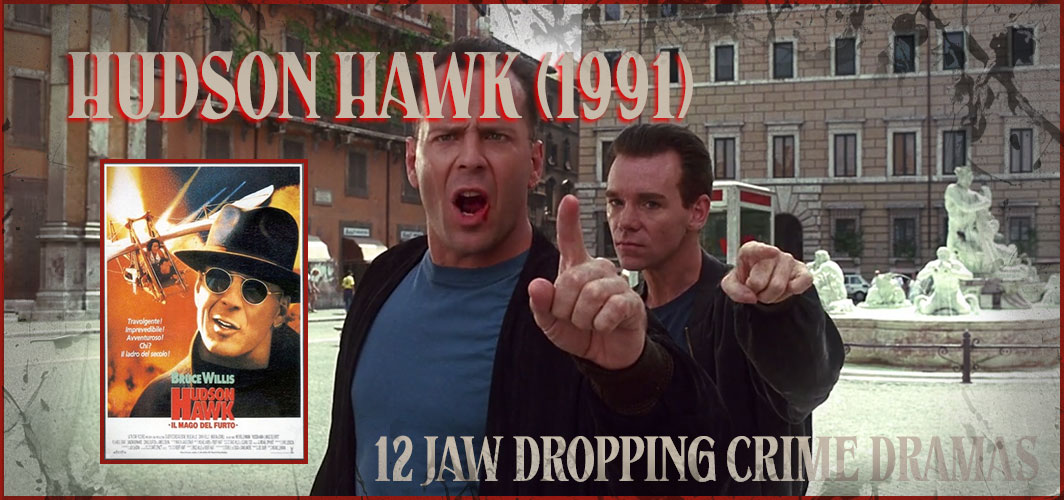
Hudson Hawk is a fever-dream of a film, that could have only been concepted during some wild drunken night out. Think of Bruce Willis as a laid‑back cat burglar who could rob a museum in his sleep but can’t seem to finish a decent cup of coffee without being pulled into yet another absurd conspiracy. And that is basicaly the films premise... Bruce Willis tries to get a coffee.
Willis plays Eddie “Hudson Hawk” Hawkins, a thief famous for timing his jobs to little songs he and his partner hum. Fresh out of prison, all he wants is a cappuccino and a life away from crime, but fate, and a remarkably persistent set of villains, has other plans. The film asks you to abandon logic entirely, even as it gleefully tosses its own rules out the window. Every scene is is over the top, every actor chews the set to pieces.
Heists are choreographed like musical numbers, fights end in pratfalls, and even grisly moments come wrapped in comic timing. That won’t be to everyone’s taste, it flopped badly in the US and picked up a handful of Razzie nods, but there’s a weird joy to watching a movie that wants to be a caper, a farce and a parody all at once.
Can You Ever Forgive Me? (2018)
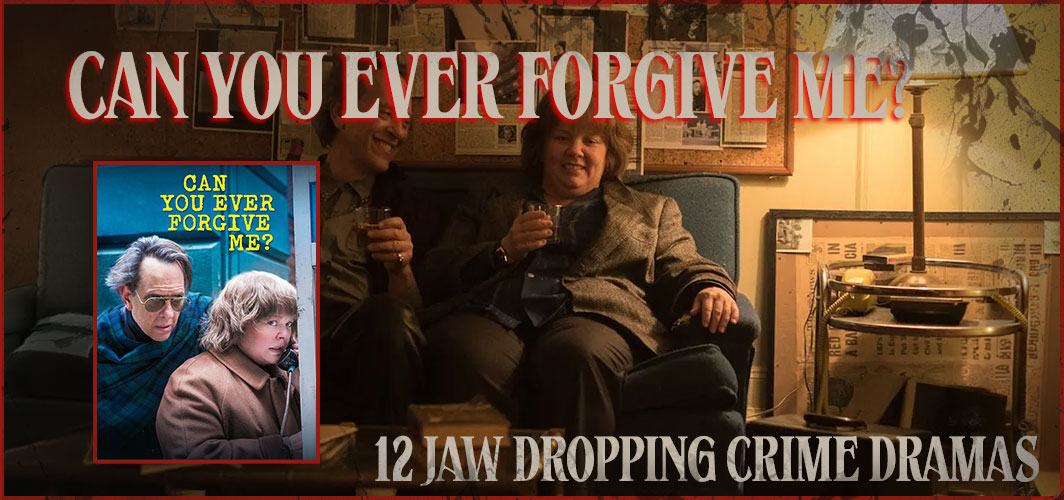
Can You Ever Forgive Me? is a quiet, sharp‑edged true‑crime drama that finds its strangeness in loneliness and small, skillful deceptions. This is not a big budget crime thriller, but a look at petty crime from someone fighting desperation. Melissa McCarthy plays Lee Israel, a once‑successful biographer who has fallen into obscurity, debt and alcoholism. To make ends meet she starts forging letters from dead authors and selling them to collectors, a scam that is at once ingenious and heartbreakingly petty.
The film keeps its tone intimate rather than sensational. Lee is no glamorous criminal; she is prickly, funny and easily wounded, which makes her slide into forgery feel less like a caper and more harrowing. Her uneasy partnership with Jack Hock, a self‑destructive small‑time dealer played by a scene‑stealing Richard E. Grant (this is his second appearance on our list after his turn as one of the more theatrical villains in Hudson Hawk), gives the film warmth and dark humour. The two trade barbed banter as they hustle for buyers, and their odd friendship becomes the film’s emotional core.
Snatch (2000)
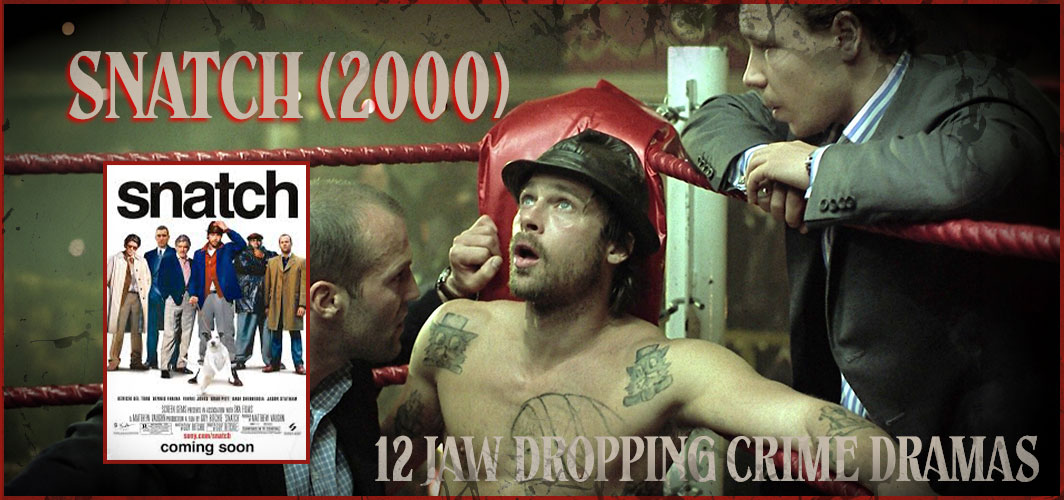
Snatch is a fast, filthy, fun tumble through London’s criminal underbelly, kinda like a short, sharp shock of a movie that feels like a cheeky punch to the ribs (ouch). Guy Ritchie stitches together two main tracks, the hunt for a stolen diamond and the chaos around an unlicensed boxing scene, and then lets an unruly cast of small‑time crooks, violent gangsters and unpredictable eccentrics collide in gloriously messy ways.
The plot is rooted in London, and at its core Snatch is pure street‑level mayhem: a stolen diamond sparks a tangle of schemes, and Turkish, a flustered boxing promoter, is dragged into a mess of crooked fight bosses, violent gangsters and hapless small‑time crooks.
This is a film that comes out of no-where.. even when it's parked right behind you. Snatch lives in its characters and its rhythms. Ritchie’s fast editing, whip‑sharp dialogue and playful voiceover give the film a comic energy that makes the violence feel like part of the joke rather than purely horrific. And it's a forumla Ritchie has failed to replicate, making Snatch a once in a generation styled movie. Standout moments include the chaotic caravan dealings with the Travellers, the bare‑knuckle fight scenes, and the mounting absurdity around the diamond itself (and one squeeky toy). you.
Very Bad Things (1998)
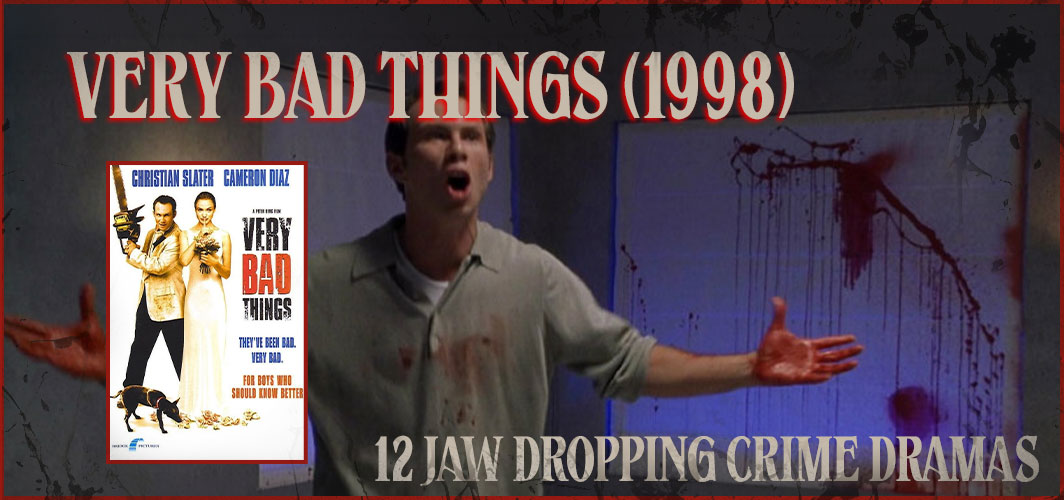
Very Bad Things is a black comedy that starts with a Vegas bachelor party and ends as a slow‑motion collapse of everything the characters thought they could control. Peter Berg’s debut is ugly, relentless and grimly funny in a way that refuses to let the audience off the hook. What begins as a single terrible mistake; a stripper dies in a Las Vegas hotel room, mutates into a chain of panicked choices, cover‑ups and escalating violence as five men try, again and again, to pretend nothing happened.
The film lives in the mounting shame and stupidity of its characters. Robert, the group’s most dangerous and selfish member, pushes everyone further into far worse crimes to hide the original accident. Guilt, paranoia and greed corrode friendships until loyalties snap, betrayals multiply and bodies pile up.
Standout moments are less about slick set pieces and more about how petty, mean‑spirited choices escalate; a rehearsal dinner confrontation, a staged insurance ploy and a wedding that turns into a desperate scramble to cover tracks. Berg stages the spiral with a clinical, unflinching gaze; the movie refuses cheap laughs and instead finds a bleak, blackly comic rhythm in the way decent lives are wrecked by cowardice and bad judgement.
Burn After Reading (2008)
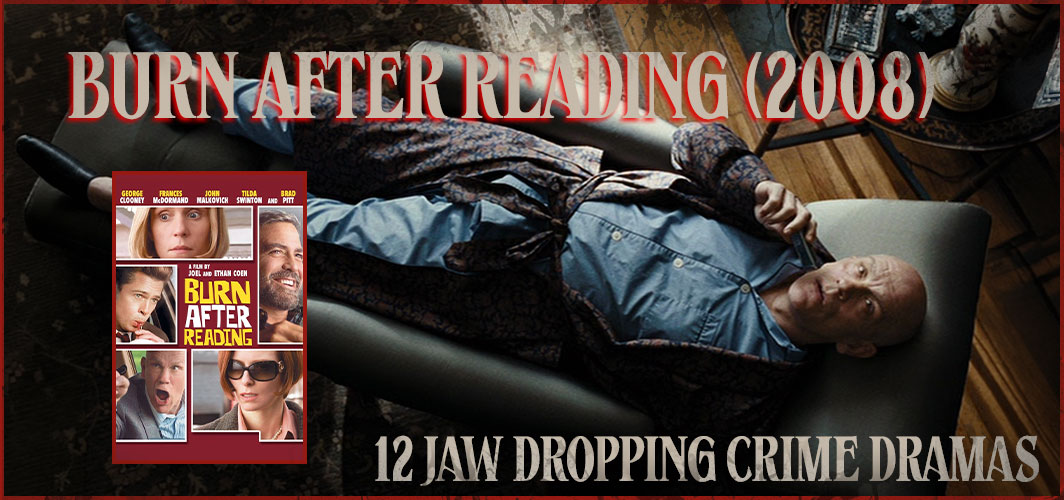
Burn After Reading is a brilliantly mean little comedy that treats national security like a punchline and ordinary people like ticking time bombs. The Coen brothers thread together a ridiculous chain of mistakes: a disgruntled CIA analyst’s draft memoir is mistaken for sensitive intelligence by two dim gym employees, and that single error detonates into blackmail attempts, botched break‑ins and accidental deaths (with a sprinkling of bureaucratic indifference).
Joel and Ethan are the chaotic twin engines behind Burn After Reading, and thier finger prints are all over this crime caper. The deadly duo are masters of letting comedy arise from character, not jokes. And here, the heroes aren’t heroes, the villains aren’t clever, and the system is mostly uninterested. That mix makes the film a savage, funny look at how small people behave when they think they’re part of something big.
What makes Burn After Reading so unforgettable is the chaos sewn through sheer incompetence. It’s not a slick caper like Ocean’s Eleven or Heat; nor is it a taut spy yarn in the vein of Tinker Tailor Soldier Spy. Instead, the Coen brothers turn the crime‑thriller playbook inside out and give us a story built on cluelessness. The result feels less like a polished heist and more like a comedy of errors where the real danger comes from egos, misunderstanding and red tape.
Death to Smoochy (2002)
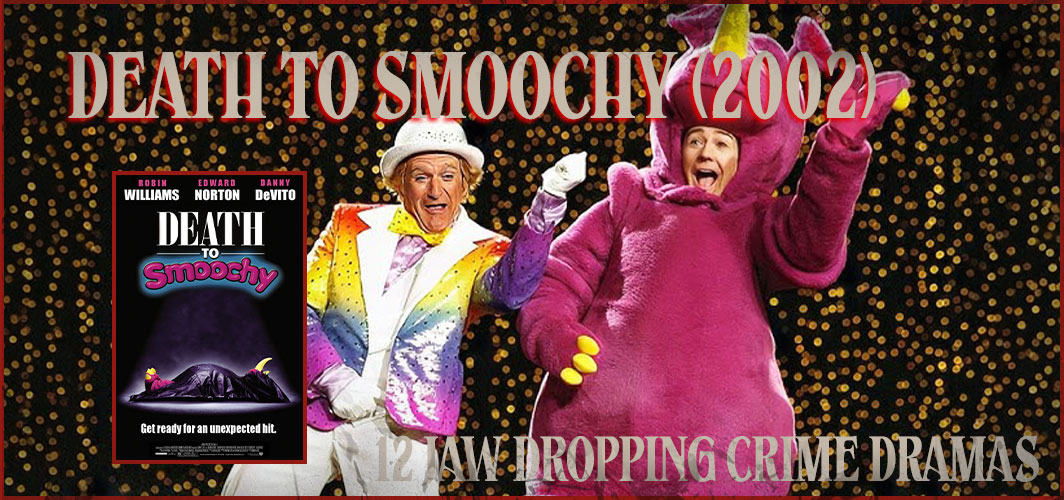
Death to Smoochy is a dark, gleefully twisted take on children’s television and the colourfull characters we grew up with as kids. When beloved TV host Rainbow Randolph is exposed for corruption and booted off the air, naive Sheldon Mopes arrives as his squeaky‑clean replacement with a rhino mascot called Smoochy. What should be a heart‑warming moment for kids TV turns into a nastily funny war over ratings, money and reputations.
Despite the goofy title, this is a full‑blown, all‑star feature with real bite, even if the teeth look suspiciously glued on. Robin Williams plays Randolph as a drunk, bitter ex‑star who won’t let go, while Edward Norton’s Sheldon is painfully earnest and hopelessly wholesome wanna-be actor. The clash is comic gold: Randolph plots petty, increasingly ridiculous revenge, and Sheldon slowly discovers TV is less about kids and more about the real powers behind the scenes. Danny DeVito chews the scenery as a sleazy agent, and the rest of the cast raise contract squabbles to full‑on mob‑style absurdity.
DeVito not only satrred, but also directed this great little crime comedy, and he clearly delights in turning colourful, childlike imagery into a backdrop for greed, revenge and murder. It ran under the radar when it hit cinemas, but this is one film that you should watch at least once in your life... if only to watch Williams in one of his long forgotten roles.
Pink Flamingos (1972)
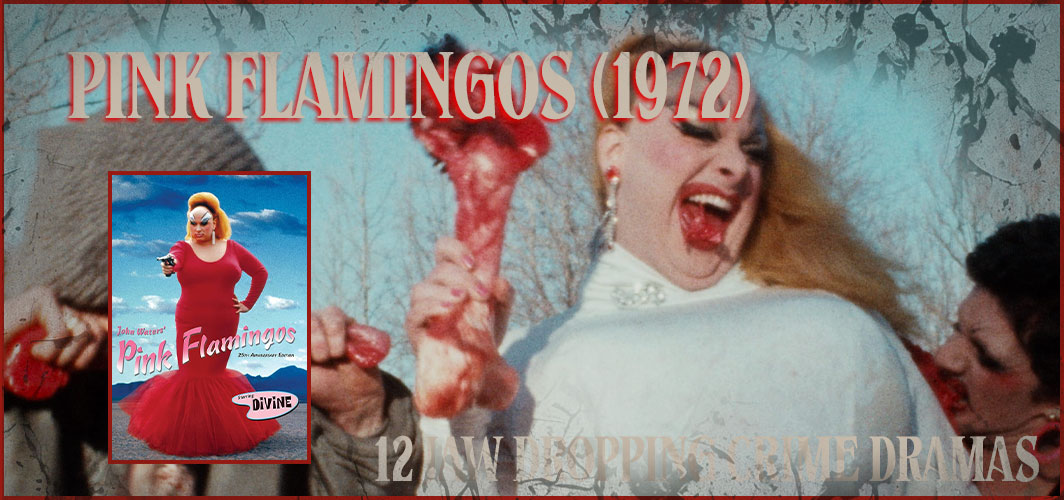
John Waters’ Pink Flamingos is the shock‑jock of cult cinema: small, filthy, gleefully offensive and impossible to forget. Divine plays Babs Johnson, a proud self‑styled “filthiest person alive” who lives in a trailer with her oddball family and answers a rival couple’s attempts to steal her crown with ever fouler, more outrageous retaliation. The movie is a carnival of tasteless gags and transgressive set pieces, deliberately built to outrage polite sensibilities while celebrating a fierce, strange sense of freedom.
This was break-out cinema at it's time. Certinaly not a main stream film, but more of an under the counter styled feature film that grew like a legend through the early years of VHS rentals. Waters pushed every button he could in order to test audiences level of tolerance, trading on disgust as comedy and on shock as social commentary. What keeps Pink Flamingos oddly magnetic is its unapologetic commitment to being outrageous; it never flinches, and that brutal honesty is part of its charm.
Pink Flamingos may not look like a crime film at first glance, but this outragoues feature includes kidnapping, arson, assault, murder and even a schemes to kidnap and traffic babies. If this film had a taste, it would surely be bitter mixed with vomit and poo. Yummy!!!

Hey Horror Fans - Now, here's a list with a little BITE. Road‑trip chaos, petty crime, disasters and cult weirdness that revels in bad taste. A few of this films left me feeling delightfully RUFF around the edges. But boy what a great bunch of odd-ball crime films. What do you think? Let us know in the comments below.
Keep Rotten"