
The Truth About 10 Scary Banned Horror Films
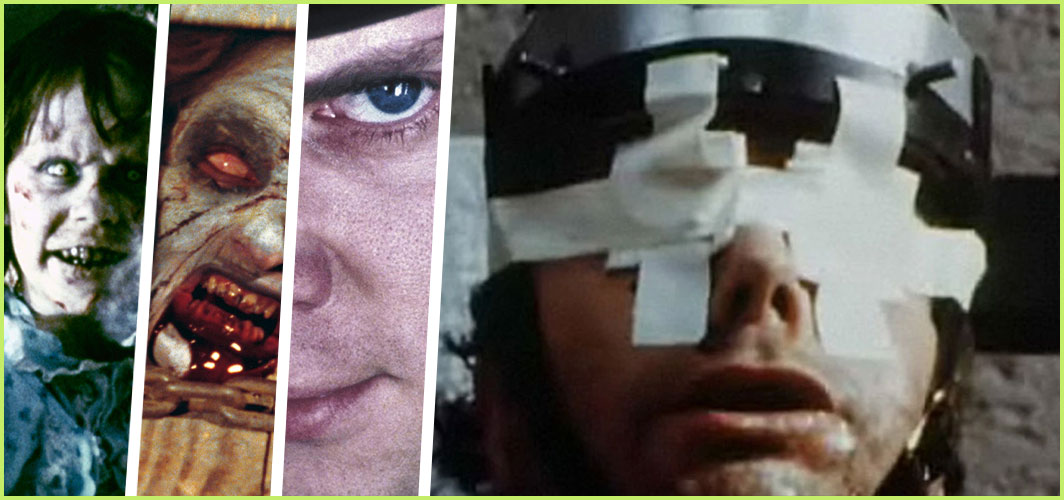
Most Horror Fans are looking for that HOLY GRAIL film, that one film that absolutely scares the bejesus out of everyone. And in doing a little bit of pipe and hat detective work, will eventually come to the conclusion that a film that was BANNED is surely the film they were looking for. Banned is BAD right? Hmm.. maybe not. Film's get banned for many different reason. Films such as The Battle of Algiers get banned for political reasons (This one was banned in France), whilst other get banned for silly things such as fictional idea, like when Back To the Future was banned in china... you know..for time travel!
But the most infamous films that ever banned usually sit under the Horror banner, due to directors and writers wishing to push the genre to it's very limits of taste and legal content. This list includes 10 of the most infamous films that was ever banned and the real reason why they dropped from circulation. Those search for the GRAIL maybe super dissapointed. These films wern't banned for being the most scariest films ever, they banned becuase they pushed moral decency and public taste to the very edge. Here is The Truth About 10 Scary Banned Horror Films.
The Exorcist (1973) – Banned for Religious Panic
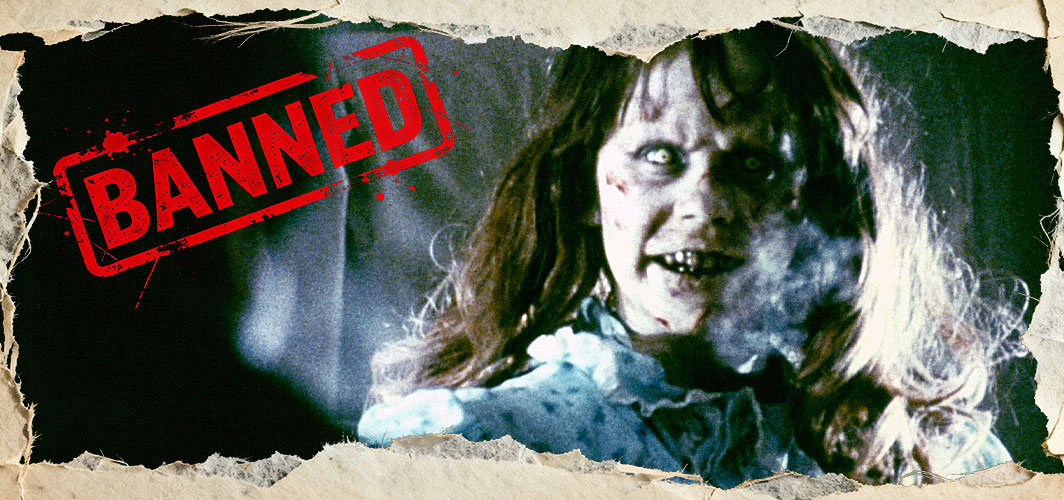
When (late, great) William Friedkin's The Exorcist hit cinemas in 1973, global reactions were extreme. Reports of fainting, vomiting, and walkouts filled newspapers, whilst many groups lobbied against the films due to it's religous connotations. The film is firmly rooted in Catholic theology, and this type of depiction of Priests and beilief structures, hit the world hard. The film's director stood firm agianst the backlash, pointing out that not everyone within the church was upset by the film, saying "Most of the people at the highest levels of the church accepted it totally because the Roman Ritual of Exorcism is still in the New Testament."
It was in the UK, that it hit hardest, as the turbulent government felt that seeing a possessed Regan cursing her mother and violating herself with a crucifix, was not something the public should see. With presssure from the church and a general unease about the films subject matter, the UK banned the films VHS release. The cinematic release had come and gone, and so this knee jerk reaction was the best they could do fix the problem. Whilst not the catalyst, the Exorcist's ban was the prelude to the wider Video Nasty Scare that rocked the UK during the 80's and 90's.
It wasn't untill 1998, that BBFC's home video ban was finally lifted for the 25th anniversary of the films release. This allowed video and DVD's sales, with even the uncut versions finally getting into the hands of frantic UK horror fans. The film was re-realsed in cinemas and the Britsih love affair with demonic possesion was finally back in play. YAY!
The Human Centipede II (Full Sequence) (2011) — Banned for Extreme Violence
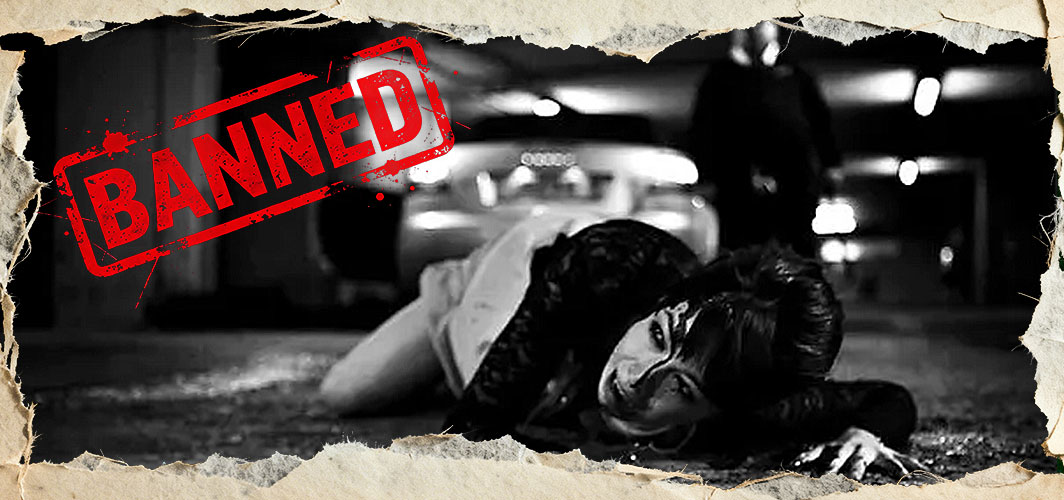
Whilst the Body Horror sub-genre had been about for quite some time when 2009 spat out The Human Centipede, the world wasn't quite ready for the "second coming" where twisted mutations would make way for surgical monstrosities. The second film in the Human Centipede series pushed that concept far beyond the original, leading to widespread censorship and outright bans. It was famously refused a certificate by the British Board of Film Classification (BBFC) in 2011, effectively banning it from legal sale or exhibition in the UK. The BBFC found the film's extreme, explicit, and graphic content, which included sexual violence and mutilation, to be a risk of harm to viewers. And this was in 2011, years after the british "video Nasties" scare had washed away.
Not deterred by the rebuff of the British stiff upper lip, Director Tom Six, who described the sequel as much more graphic than the first film, used the UK ban for marketing. The main concerns were graphic gore, sexual violence, and obscenity. However, horror fans felt that it was more of a satire of the more serious first film, and Tom Six's third offering, The Human Centipede 3 (Final Sequence), went even crazier with the serving of a 500 man built Human Centipede. Twisted yes, but it's crazy fun that the world would be missing if not for people like Tom Six who push certian boundaries for entertainment. We are still waiting for part four where Tom Six drops a 1000 person Human Centipede in space (we hope)!
Men Behind the Sun (1988) – Banned for Historical Atrocity
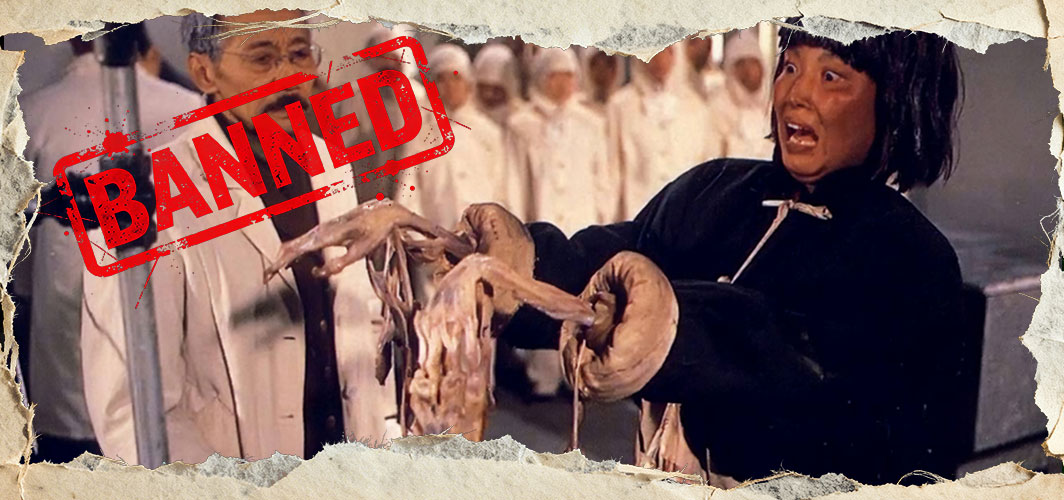
Few films have faced as much international condemnation as Men Behind the Sun (1988), a Chinese historical horror film based on the real crimes of Unit 731 during the Second Sino‑Japanese War. This war films was banned or heavily restricted globally due to extreme content, including the alleged use of real human corpses. It was refused classification in Australia (later allowed on appeal) and mandated for cuts in the UK.
The film features, and was criticized for, explicit depictions of torture, human experimentation, and the apparent use of an actual child's autopsy footage (confirmed by the director). Whilst it faced severe censorship worldwide due to its disturbing, realistic, and violent nature, In Japan, it caused public outcry, resulting in death threats against the director, T. F. Mou. It was released without a rating in the US and is considered an exploitation film. Throw in animal cruelty, thanks to a scene where a cat is thrown to hungry pack of rats, and you have a film that just about upset everyone. WHilst it's avaible today witghout any sensorship, it's still a film that takes a certian type of taste to watch. It's just not a very pleasent viewing expericne.
A Clockwork Orange (1971) – Withdrawn After Violence Fears
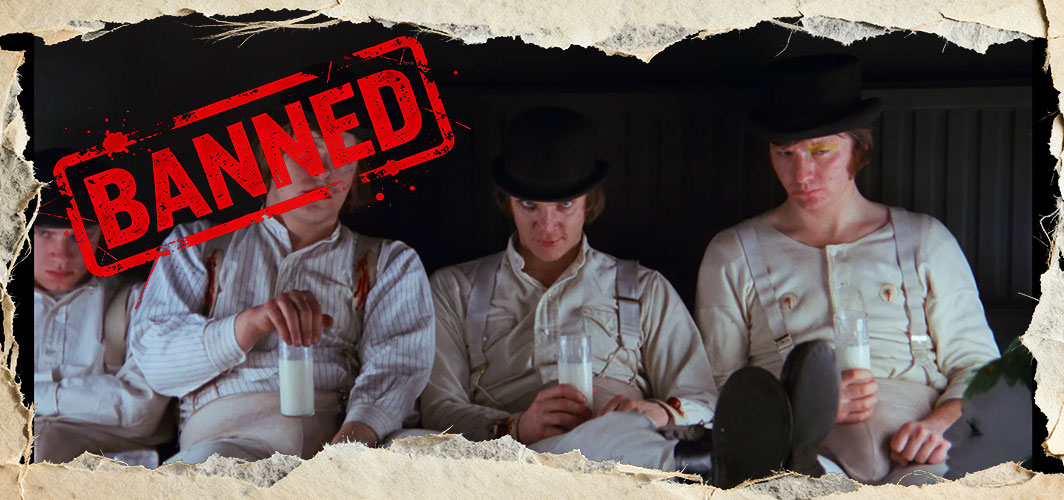
While not always labelled as horror, A Clockwork Orange (1971) is regularly bundled alongside banned horror films due to its disturbing content. Lets face it, Stanley Kubrick disturbing vison of the future is darker and more voilnet than many genre films.
The interesting thing about this ban is that is was never enforced by any govening body, but by it's creator itself. Stanley Kubrick was british film director that was highly regarded in the undustry, but his choice of adapting Anthony Burgess dystopian drama, A Clockwork Orange, was met with controversy in his native country.
Following accusations that the film inspired copycat violence, whihc resulted in him receiving threats against his family, Kubrick pulled the film from distribution in the UK. This led to a huge bootleg boom of VHS copies, for fans that refused to let the film dispeaer of the shelves of video stores.
In response to the copycat crimes, Kubrick reinforced his view that the film was simply not suitable for British audiences, and that its entire emotional point was being ironically mirrored by the situation itself, stating:
To try and fasten any responsibility on art as the cause of life seems to me to put the case the wrong way around. Art consists of reshaping life, but it does not create life, nor cause life. Furthermore, to attribute powerful suggestive qualities to a film is at odds with the scientifically accepted view that, even after deep hypnosis in a posthypnotic state, people cannot be made to do things which are at odds with their natures.
A Clockwork Orange remained banned untill Kubrick's death in 1999, when the film finaly re-released after nearly 27 years. Much like The Exorcist's uk ban, the film had a massive cinema re-release and the film finally returned to UK shelves, this time in a shiney DVD format.
Cannibal Holocaust (1980) – The Film That Got Its Director Arrested
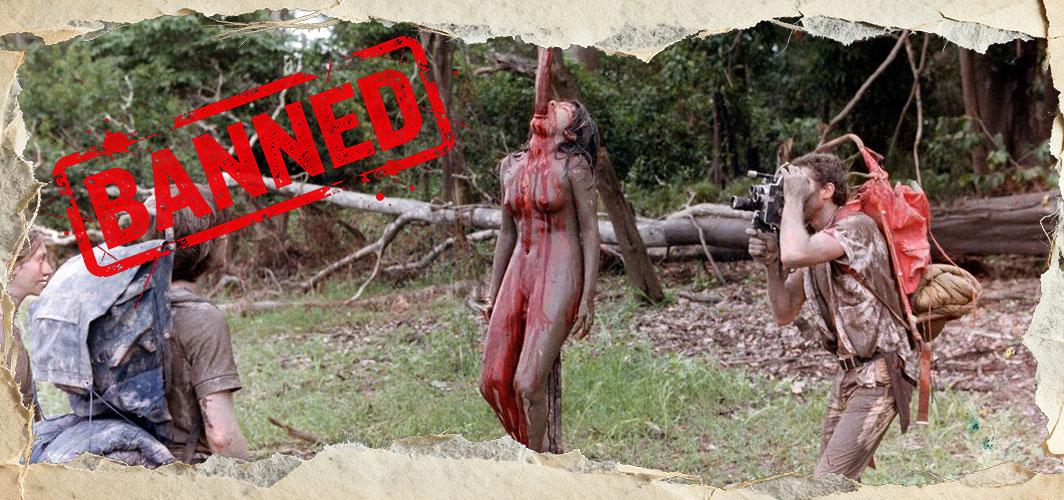
If you were nothcing your bed post for every country that banned your film, Cannibal Holocaust would be looking for a new bed. Maybe it was the era or maybe it was the content, but one thing is sure, thsi film pissed off a lot of censors and was banned from release in over 50 countries, including the UK, Australia, and South Africa. According to the records, this was due to extreme, realistic graphic violence, sexual assault, and the killing of animals on screen. Yes, Cannibal Holocaust certinaly had a full bingo card of horrors ready to be "enjoyed". Rape.... check, brutal mutlation... check, Cannibalism... check, actual animal crutaly (and murder)... check. BINGO.
Despite this badtaste bear of a film, it's real legacy lies in the films aftermath which saw criminal charges on the films director, Ruggero Deodato. Part of Cannibal Holocaust is shot as a "found footage" film, where the casts last days are played out via hand held cameras. So realistic was this footage that Deodato was arrested in Itally for murder, belliving he had shot a snuff film. It was only after his lawyers produced the cast, alive and well, in court, that the director was finally released from prison.
Whilst the films world view has softened over the years, thanks to the revival of found footage around the early noughties, Cannibal Holocaust remains banned or highly censored in several nations to this very day. It's mostly viewed as cult classic, but it seems that tastes have not changed when it comes to graphic rape, mutilation and animal harm. Some folks still find thsi type of stuff hard to swollow, even if it's presented as entertainment.
The Last House on the Left (1972) – Too Brutal for Audiences
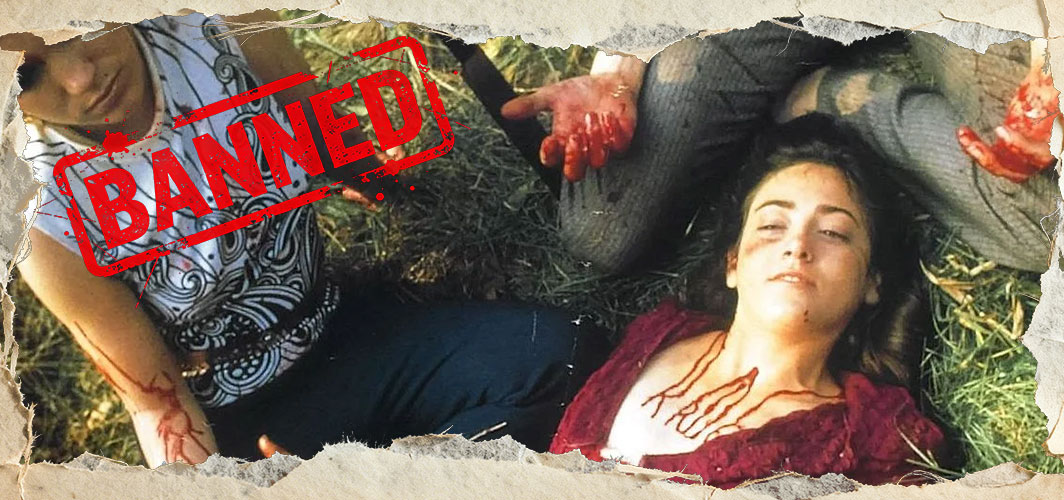
Wes Craven’s debut, The Last House on the Left (1972), shocked viewers with its raw depiction of violence. Whilst Craven is better known for his more main stream horror films and franchise, his first big film step was more of stumble.
Tripping over his own feet, Craven's first outing was a rape-revenge film that really rubbed people the wrong way. Depicted Sexual violence in a realstic tone, the film failed to find an audisnce and ended up on the banned list for much of Europe. Yes, the United Kingdom dropped it onto it's growing Video Nasties list, but much of it's eastern neigbours also denied, normnal and horror folks alike, the chance to watch this grim feature.
The film was finally relased uncut in 2008, with it's content now viewed as being "light" compared to contempary horrors of that time. Considering the Human Centipede came out shortly after The Last House on the Left's proper release, I think the cesnors were probably right.
I Spit on Your Grave (1978) – Outrage Across the Globe
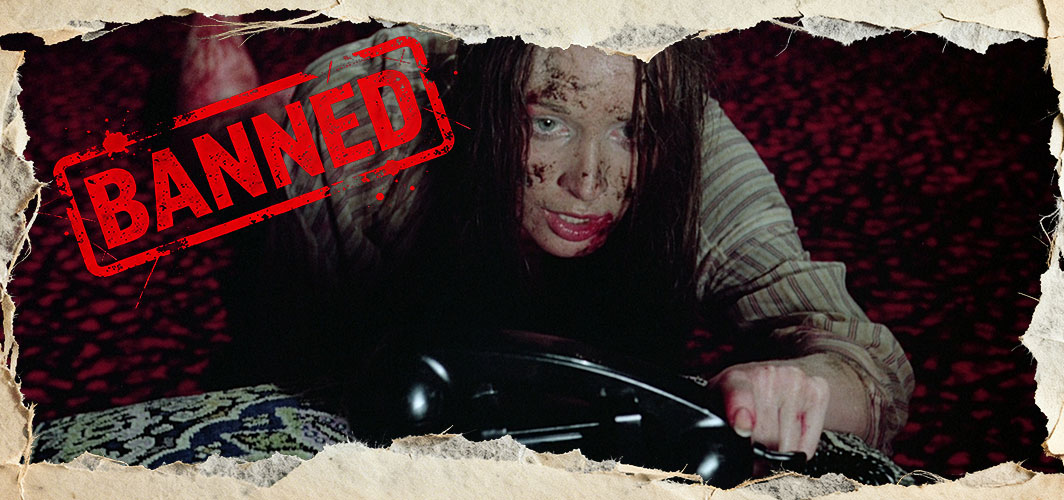
Few films sparked as much controversy as I Spit on Your Grave (1978). Another rape film on our list, this was extra gerivous due to it's raw and brutilistic approach which haveily pushed a misogynistic world view. Whilst many films were made for entertainmnet, many horror fans still can't quite agree on who this film is for. Dispite some grim and gory set pieces, the film lacked any levity and left audiances stunned. Critic Roger Ebert famously called I Spit on Your Grave a "vile bag of garbage".
The film was heavily cut in many regions, with Ireland, Norway, Iceland, and West Germany, banning the film altogether, claiming that it "glorified violence against women".
The MPAA tried to remove the films R rating, wanting to list it as X (UK 18). However, this was swiftly dealt with once director Meir Zarchi agreed to remove all scenes showing and referencing anal rape. Classy stuff!
The Evil Dead (1981) – Banned… Then Beloved
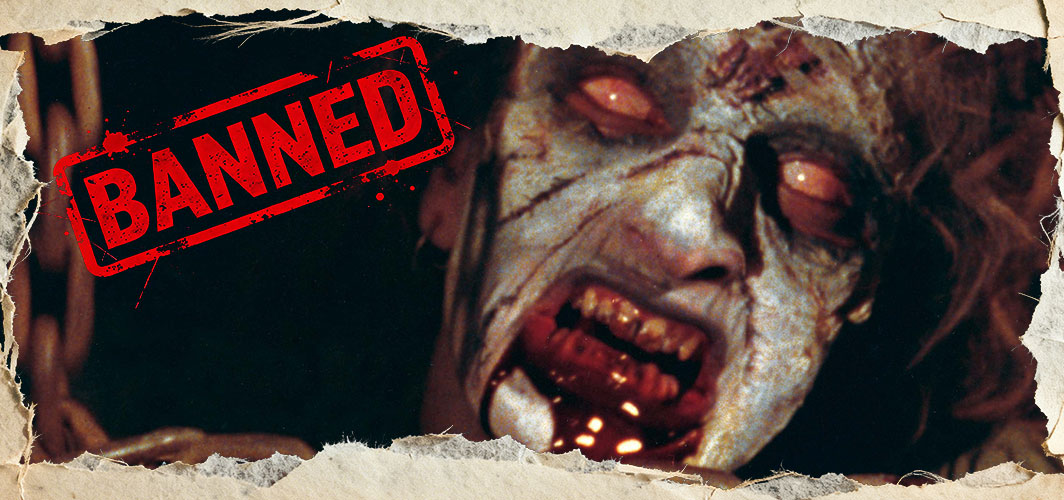
Sam Raimi’s splatter classic The Evil Dead (1981) didn’t start out as a cult favourite. In fact, The UK and Germany both suffered for a long time, as the film failed to hit those shores. The Evil Dead was banned upon its initial release in Germany. It was, for a long time, forbidden to be sold, advertised, or shown in cinemas. It was only legally de-listed in 2016, allowing the german public to finally enjoy a 30 year old film.
But why did the film make such a big unhappy bloody spalsh. One word for you, courts! It's one thing to provoke the ire of the censors, but when the German courts stepped in the film was pretty much doomed. Director Sam Raimi pushed both theatrical and video release in order to avoid issues with censorship boards, and this really pissed of the German courts, who threw all thier weight on the film. And boy was it it a big weight and wait. It wasn't untill Sony Pictures Home Entertainment’s lawyers convinced three German courts about the ban, that The Evil Dead fianlly landed on shelves three decades later.
The Evil Dead is widley accpeted as one of the all time greates cult horror films, and an epic exercise in gorilla film making. It launched both Sam Raimi and Bruce Campbell's film carreers, and is enjoyed around the world as a truely great splatter film. Groovey...
Salò, or the 120 Days of Sodom (1975) — Banned for Extreme Sexual Violence
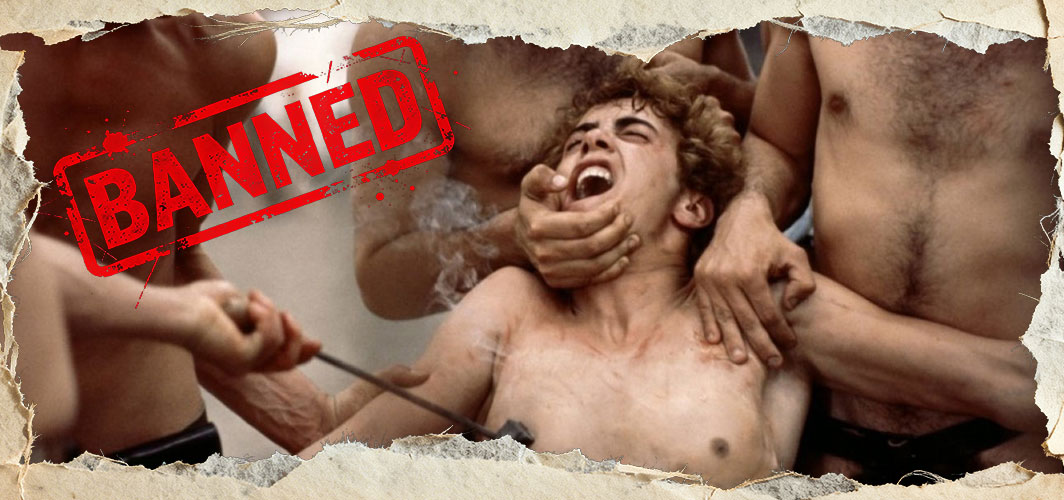
They say that art can be tasteful, but that realy doesn't seem to be the case with the twist 70's horror that pushed every known button in order get a reaction from it's audiance. Often described as art‑house cinema rather than horror, Salò is nonetheless one of the most frequently banned films in modern film history. Directed by Pier Paolo Pasolini, is a controversial political horror film set in the 1944-1945 Italian fascist Republic of Salò. It is a loose, updated adaptation of the Marquis de Sade's 1785 novel. And if your even remotely aware of the Marquis de Sade's, you'll know that means intense and often disturbingly agressive scenes of sexual torture.
Divided into four segments, inspired by Dante’s Divine Comedy, the film depicts the systematic dehumanization of its victims, moving from psychological manipulation to explicit, graphic acts of violence, mutilation, and murder, all wrapped up in a nice cinematic bow.
Upon release in 1975–1976, Salò was banned in numerous countries, including Italy, the UK, and Australia, for its extreme content. These include Graphic Depravity, Abuse of Minors and Intense Violence. Not the type of show you'd drop when your Nan visits.
This isn't like some of the films on our list. Salò is a terrorfying assult on the senses, and many horror fans have voiced just how disturbing they found this film, with many never wanting to see it again. In 2000, many countries lifted the ban, even allowing the uncut version to be released. So now you can experience it in all it's glory. Some of you may disagree, and say that it's quite tame compred with modern horror, but pay in mind, during the 70's, this was pure vile.
Faces of Death (1978) - Extreme Reality
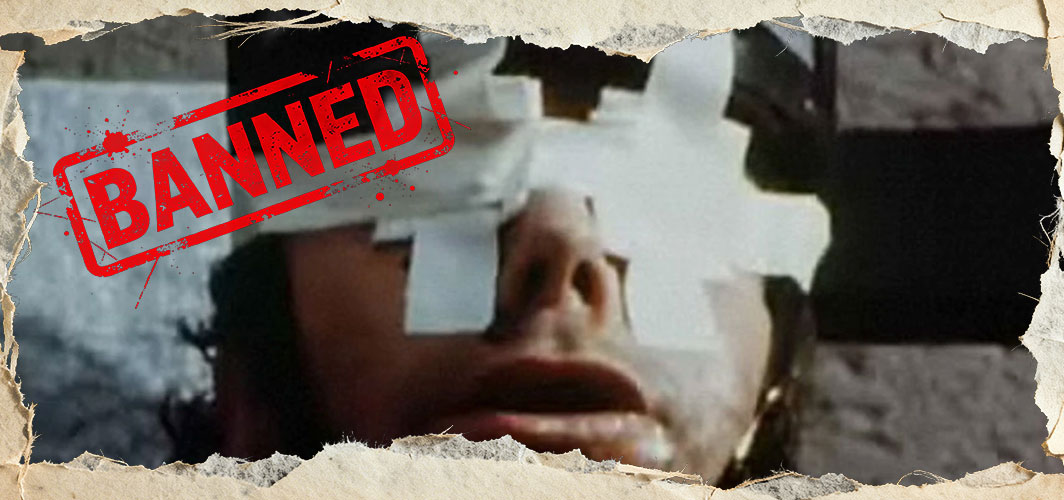
Some films really do deserve to be on this list, especially when the filmmakers are deliberately “poking the bear.” Case in point, the 1978 documentary film Faces of Death, whihc presented it's content as real life scenes of death and torture. And it largely because of its claim that it became one of the most controversial films of its time.
Faces of Death blurred fact and fiction in ways that unsettled most audiences and alarmed many authorities across the globe. Faced with footage of executions, grusome autopsies and an infamous scene of a monkey having it's head caved in with a hammer, many countries quickly rushed to banned it outright.
However, much of the films material was staged or manipulated (and we say much, becuase some of it WAS real), this was not widely known on its initial release. The film makers wanted people to think they were watching some pretty grim stuff. And even when the facts came to light, it was the films assertion that it was all "real" that kept the film from shelves for many years.
Faces of Death acted as the straw that broke the camels back, for many countries, highlighting broader concerns about the limits of free expression, the responsibility of filmmakers, and the impact of graphic imagery on viewers. Suddenly, the world was wondering just how "free" we should be without certain controls. Should we be able to watch what ever we want? Can we film and sell just about anything. Certainly, many governments though not, and censorship in cinema suddenly became a real thing. Faces of Death did not create this censorship, but it certainly fed directly into it and intensified the conversation that was boiling deep under the skin of governmental departments.
Hey Horror Fans - I was banned from an Adult Book store once for being dressed as panda covered in syrup and holding a sack of potatoes, but that's a story for another time. These BANS certainly seem more relevant and really delve deep into a ceratin time and Cultural sensibilty. But at what point does control become excessive or authoritarian. The majority of us are not living in an orwellian nightmare and enjoy our freedome to watch and read what ever we want. But some might says that control can protect. But this is all getting way to seriosu for me, i'm off to my local book store... jump below and tell us what your favorite BANNED film is, or maybe you favorite film that should be banned. Sound off in the comments.
Keep Rotten"


