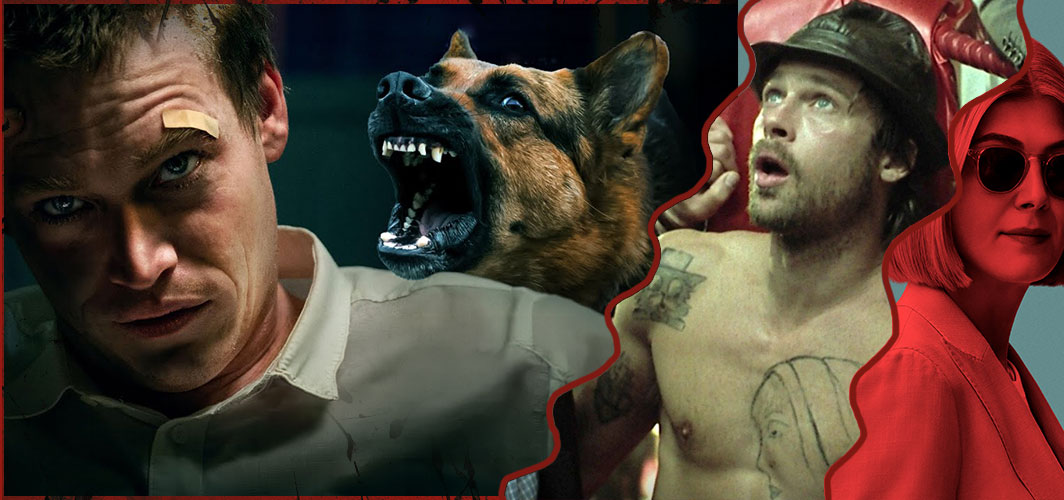
The Shine: Discover How it Connects Stephen King’s Astonishing Universe

The Shine
If you’ve read any of Stephen King’s novels, or explored his wider body of work, you likely know the story behind how he came up with the idea for The Shining (1980).
In 1974, Stephen King and his wife Tabitha stayed at the near‑empty Stanley Hotel in Estes Park, Colorado. The hotel was preparing to close for the winter and, much like its fictional counterpart, felt abandoned and unsettling. King wandered its quiet corridors, taking in the uneasy atmosphere, before sitting down in an empty dining room where chairs were stacked upside‑down on the tables, a silent, unsettling sight that stuck with him.
That night, King retired to Room 217. While he slept, he was struck by a vivid nightmare in which his young son was being chased through the hotel’s long corridors by a fire hose. King jolted awake in a panic. He lit a cigarette, stepped out onto the balcony, and cooled off in the cold Rocky Mountain air.
By King’s own account, as he smoked that cigarette and hurriedly scribbled notes, the idea began to take shape. He later claimed that by the time he finished smoking, he had the complete outline of what would become The Shining (1980), a story born from isolation, anxiety, and the creeping horror of empty spaces.
The seed planted in Room 217 would grow into one of the most influential horror novels ever written, and the birthplace of the Shine itself. In this article, we are exploring The Shining, the people that have it and the forces that want it. Here is The Shine: Discover How it Connects Stephen King’s Astonishing Universe.
What Is the Shine? The Story of Dick Hallorann.
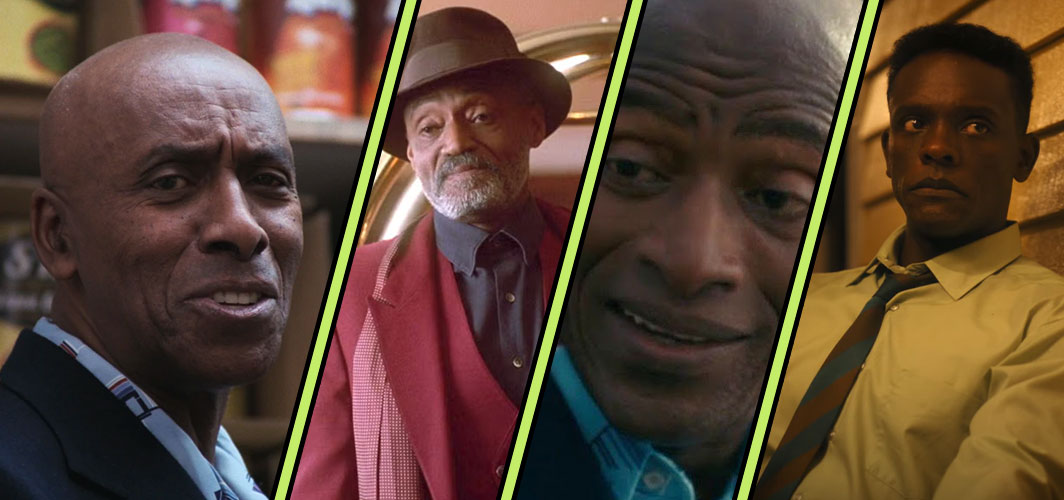
For the layment, The shine is a magical power found within Stephen King's wider work. First introduced in his third novel The Shining, published in 1977, this novel explored this supernatural gift, set against the backdrop of an old haunted hotel high up in the rocky mountains.
Dick Hallorann, the head chef of the Overlook Hotel, is the warm, weary heart of King’s exploration of the Shine. Hallorann explains the Shine as a psychic talent shared by some people. It includes telepathy, precognition, clairvoyance, mediumship, and deep empathic awareness. Hallorann, recognises the Shine in young Danny Torrance the way a cook recognises the taste of a spice, instantly and deeply.
Hallorann, had the gift from a young age, and he learnt much about this apperently inherited power from his grandmother, Rose Hallorann, who called it “shining”. She also taught him to “lock” dangerous apparitions away in a mental lockbox, a tool Danny uses for years. Hallorann’s Shine drove key acts in King’s books: he senses Danny’s distress from miles away, races to help, and later, even after death, guides Dan Torrance and Abra Stone in Doctor Sleep through spirit possession. What ever the Shine is, it persisits even through death.
Hallorann's backstory is complex one that is covered through three different novels, revealing interesting details about the cheery old Overlook Chef. In King’s expanded account (chiefly Doctor Sleep), Dick Hallorann grew up with a complicated, brutal family life. His paternal grandfather; called “Black Grandpa” in Hallorann’s telling, physically, emotionally and sexually abused him. Fear and family power kept him silent, but after Black Grandpa died his malignant spirit continued to haunt Hallorann. Rose taugh him how to stop these hauntings by creating a lock box in his mind, a mental manifestation of a cage for the un-quite spirits. When Hallorann later teaches the lockbox to Danny Torrance, Danny asks how many he can make; Hallorann replies, “As many as you need.” When Danny asks if the things inside are still alive, Hallorann answers bluntly, “Do you care?”
In It (1986), Hallorann is a young army cook who helps run the Black Spot, an African‑American nightclub in Derry. When the club is destroyed in a racially motivated arson in 1930, Hallorann uses his Shining to find and free trapped patrons, including William Hanlon, father of Mike Hanlon. During the blaze Hallorann and William see Pennywise as a giant, floating bird with balloons tied to its wings, a monstrous vision that seizes one of the attackers and flies off.
In Welcome to Derry (a different timeline and set of events), Hallorann is working with the military to track Pennywise. A brief encounter with It briefly forces open his mental lockbox, releasing the trapped spirits he had contained. Those spirits torment him and push him toward suicide, until Hallorann regains control. He ultimately helps stop Pennywise by using his Shining to enter the creature’s mind and confront it from within.
What Dick Hallorann teaches us is that the Shine is more than a parlor trick: it’s a deep psychic faculty that lets certain people see hidden truths, speak without words, and interact with spirits. He warns that “the world’s a thirsty place", the Shine attracts attention, and both spirits and people can hunger for its power. In short, the Shine is a spiritual force: useful for connection and protection, but dangerous because there are things out there in the world that crave it!
Danny Torrance – Living With the Shine
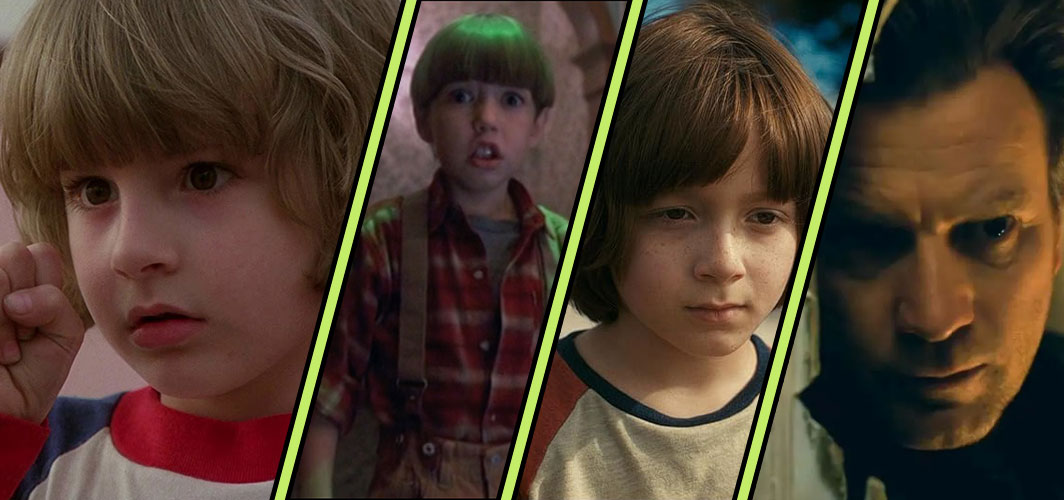
The Shining (1977) / Doctor Sleep (2013)
Danny Torrance is the touchstone for how the Shine shapes a life.
As a child in The Shining (1977), Danny is overwhelmed by the Shine. He shares a silent, wordless bond with Dick Hallorann, feels the hotel’s violent memories, and receives terrifying visions of both past horrors and possible futures. And when he arrives at the Overlook, the spirits stir.
The Overlook doesn’t just see Danny as a tasty target (om nom), it sees his Shine as fuel. The hotel’s spirits feed on psychic energy; Danny’s light is a bright, concentrated source that allows them to move from suggestion and hallucination into something far more dangerous. With a child who truly shines, the Overlook can make visions physical, hijack bodies, and act in the world instead of merely whispering to it.
That’s why the ghosts press Danny to “join them.” They seduce and terrify to isolate him from his family, then possess his father so the hotel can use Jack as an agent. If the Overlook had absorbed Danny, his sustained psychic power would have turned its passive influence into direct action. The mechanics aren’t spelled out as a tidy plan, King leaves the hotel’s motives uncanny and partly unknowable, but the pattern is clear: more Shine equals more agency. For an eldritch place whose hunger is longstanding, gaining a steady source of raw psychic force is survival and expansion, not ideology.
Years later, in Doctor Sleep (2013) Danny still carries the Shine. It has not faded; it has aged with him. To blunt the constant psychic noise he gradually turns to alcohol, which he uses as a crude suppressant. King clearly insists the Shine doesn’t vanish; it waits. The coping strategy that once dulled the ache becomes a trap: addiction numbs the gift but also corrodes life.
As an adult, Danny finds work in a hospice, where his Shine lets him ease dying patients into whatever comes next. He uses his gift to reach into their memories and comfort their final moments, a form of service that replaces alcohol as his coping mechanism. It’s a double-edged salvation: sobriety through purpose. Rather than numb the light, he channels it deliberately, using it to help and heal instead of bottling it up and trying to live a normal life.
Dan’s arc argues the true horror of the Shine is duration. Unlike a sudden haunting, psychic sensitivity endures. Surviving the Shine isn’t about curing it; it’s about learning tools, lockboxes, community, mentorship (as Hallorann once provided) and finding ways to live despite the persistent chorus of other people’s pain, memory and hunger. And boy does the world hunger!
Abra Stone — The Next Generation of the Shine
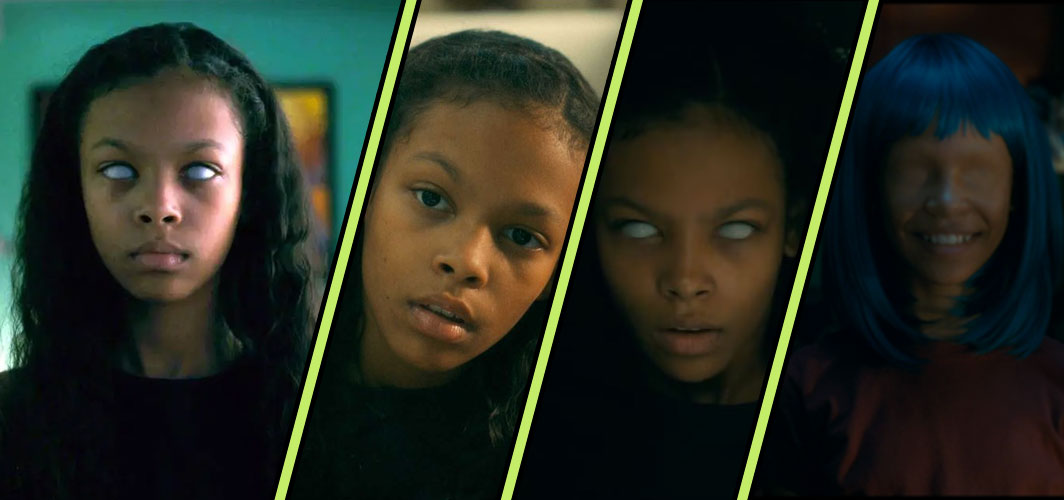
Abra Stone proves that the Shine can be inherited, as she is Danny's niece (daughter of his half-sister, Lucy Stone), and that it can grow stronger with each generation. Even as an infant she registers on charts and alarms: a telepathic range that stretches farther than anything Danny had seen as a child, and a precognitive clarity that lets her glimpse dangers before they arrive. By early adolescence Abra’s abilities outstrip Danny’s; she can not only read minds but lock onto other Shiners, intercept their impressions, and fight them mentally.
Her power is notable for its focus and intensity. Where Danny’s Shine was noisy and burdened by trauma, Abra’s is clean and direct, which makes her both a beacon and a weapon. That precision is what terrifies the True Knot, the quasi‑immortal cult that feeds on psychic energy. The clan travels to find bright sources of steam, human life force released by people who shine, and Abra offers a richer, purer harvest than they’ve encountered. Unlike Danny, who learned containment and survival through Hallorann’s lockbox and through hard years of sobriety, Abra starts with raw potency and a fierce instinct for defence. Her existence pushes King’s mythology forward: psychic gifts aren’t static relics of the past. They evolve, concentrate, and, in the wrong hands, become a prize worth killing for.
Jake Chambers – A Beacon Between Worlds
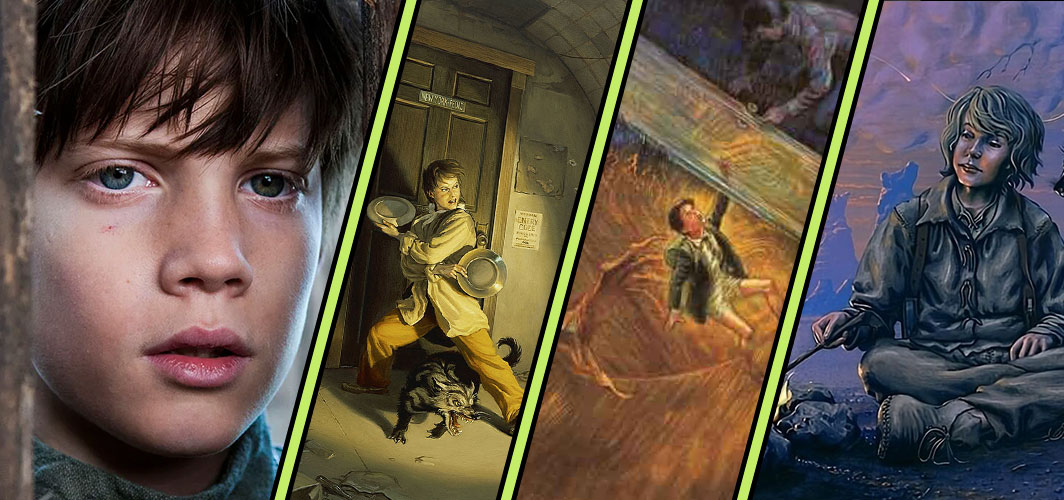
Jake Chambers may be the most important Shine user in King’s multiverse.
In Stephen King’s Dark Tower cycle, Jake Chambers is the Shine given cosmic scale. His gift shows up as telepathic communication, vivid precognitive dreams, and a terrifying sensitivity to the thin places between realities. Jake doesn’t just sense the uncanny, he draws it. His presence acts like a lighthouse: creatures, agents and forces of the Tower notice him and cross thresholds to find him. That makes Jake both invaluable and dangerously exposed.
His Shine also makes him unusually mutable. Jake dies and returns more than once, and those resurrections are never neat metaphysical accidents; they point to a recurring pattern across King’s work: certain Shine users refuse to stay dead, or are pulled back because whatever the multiverse is balancing needs them. In The Dark Tower, the stakes are huge, Jake’s mind can affect the Beams that hold reality together. His visions and connections help Roland and the ka-tet navigate fractured worlds, but they also risk attracting enemies who can exploit his sensitivity to collapse barriers between dimensions.
Where Danny’s Shine is a private burden, Jake’s is a public fulcrum. It makes the Shine a force that anchors plot and metaphysics: intimate psychic talent becomes the hinge on which the fate of entire worlds turns.
Mother Abigail – Faith and Foresight
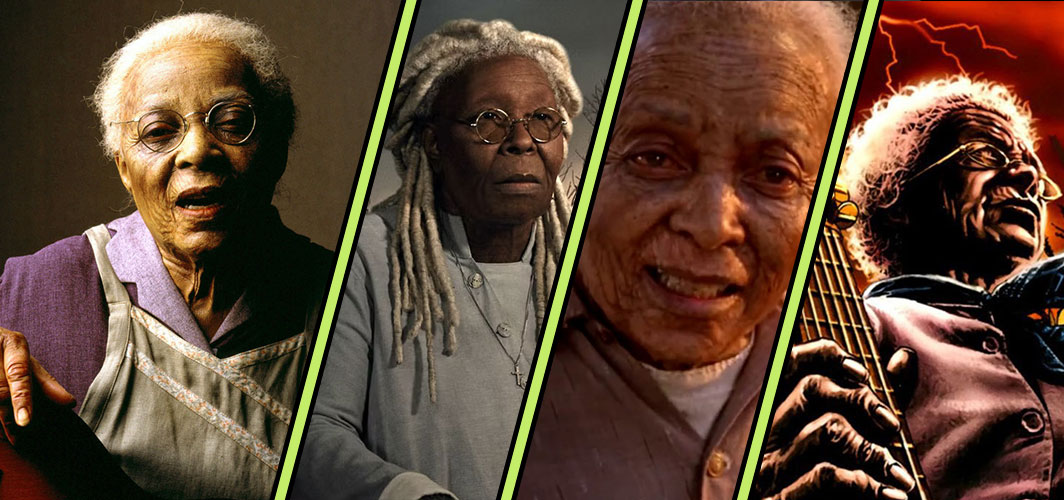
The Stand (1994)
In The Stand, Mother Abigail functions as a spiritual anchor for the survivors of civilization’s collapse, but her gifts sit squarely in the same psychic territory as the Shine. She receives vivid prophetic visions, senses the presence of malevolent forces, and communicates across distance with those who are tuned to her frequency. Where many Shine users portray their talent in clinical or mystical terms, Mother Abigail frames hers as direct communion with God, yet the effects are remarkably similar: precognition, clairvoyant insight, and a capacity to guide others toward safety.
King deliberately blurs the line between faith and psychic power through her character. Mother Abigail’s revelations come in prayer and symbolic imagery, and her moral authority rests on both spiritual conviction and demonstrable psychic competence. For survivors who follow her, belief becomes a practical tool: faith shapes how visions are interpreted, giving structure and purpose to otherwise frightening knowledge. That framing also softens the burden of sight; whereas other Shine users often feel cursed or hunted, Mother Abigail’s faith offers a framework that converts foreknowledge into duty.
But faith doesn’t make her infallible. Her visions are partial and open to interpretation, and the way she wields influence shows the same vulnerability any Shine user faces: human frailty, misreading, and the risk that enemies will seek to corrupt or silence a psychic beacon (as Randall Flag and his followers do). Mother Abigail’s strength lies in how she channels prophetic sight into communal resilience, a reminder that the Shine, when married to conviction, can become a source of hope rather than only of terror.
Ellie Creed – Tragic Gift
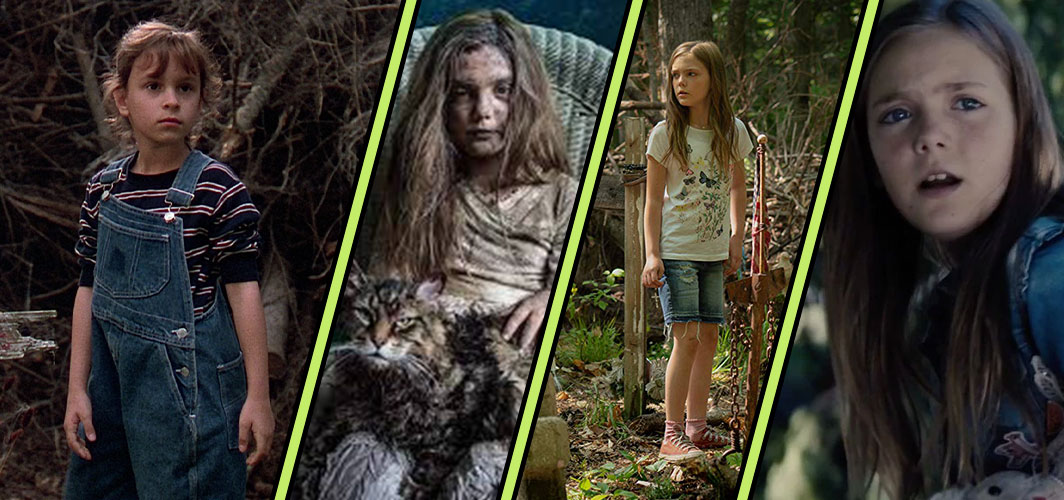
Ellie Creed from Pet Sematary (1989) is one of the earliest examples of the Shine manifesting in a child outside The Shining’s Torrance family. Although King never directly names her abilities as “the Shine,” the signs are all there , and the genetic link is hard to miss.
Her father, Louis Creed, is haunted by the ghost of Victor Pascow, who acts as a spectral guide and warning system throughout the story. Louis sees and hears Pascow, experiencing visions that would send most people running for a stiff drink. But Ellie, still a child, shares these supernatural experiences, and possibly surpasses her father’s sensitivity.
Ellie not only sees Pascow in her dreams, but also receives clear premonitions and prophetic warnings. Her nightmares are vivid and specific: she knows when something terrible is about to happen, and she tries to warn her parents about her fears. The novel hints that Ellie’s connection to the supernatural is deeper and more instinctive than Louis’s, suggesting a strong genetic component to the Shine.
If King’s world tells us anything, it’s that children often inherit their parents’ psychic curses, and Ellie Creed’s story is a chilling confirmation. Her raw, untrained psychic gift makes her one of King’s most quietly tragic Shine-bearers.
Carrie White — Destruction Through Trauma
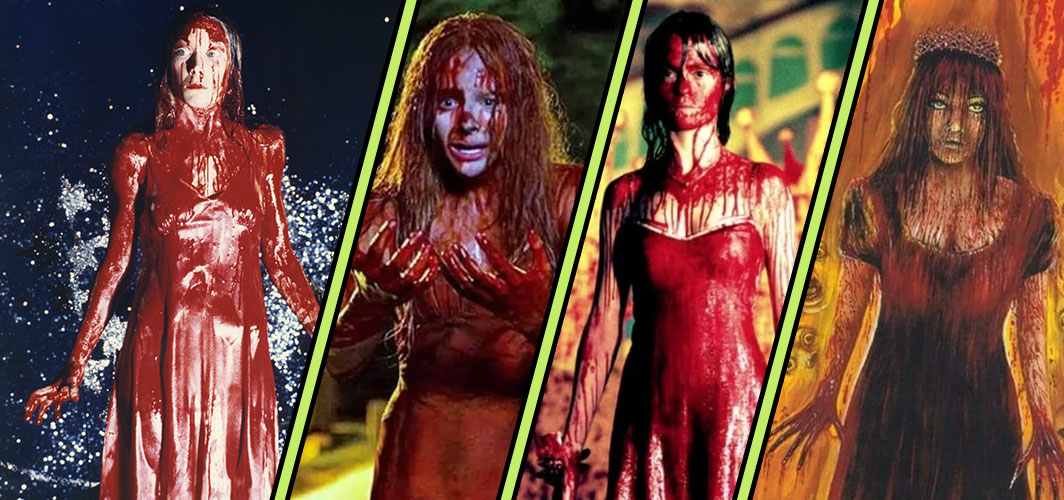
Carrie White, the tormented protagonist of Carrie (1976), stands as one of Stephen King’s most iconic characters, and perhaps his most explosive example of psychic power gone unchecked. While King never explicitly labels Carrie’s abilities as “the Shine,” they fit the pattern: her telekinesis manifests in adolescence, triggered by trauma and emotional turmoil.
Carrie’s power is both a gift and a curse. Raised by her fanatically religious mother, Margaret White, Carrie is isolated, abused, and bullied at school. This relentless pressure acts as a psychic tinderbox. When her torment reaches its peak during the infamous prom night humiliation, her telekinetic abilities erupt with catastrophic force. The resulting carnage is not just revenge, it's the psychic energy of a lifetime’s pain unleashed in an instant.
King has, in interviews and later novels, implied that psychic ability can take many forms in his universe. Carrie’s telekinesis is simply a variation on the Shine, sharing common roots with Danny Torrance’s visions and Abra Stone’s mental battles.
Carrie’s tragedy is that her power develops in total isolation, with no mentor or guide to help her understand it. In King’s world, a little guidance might have saved her, and the town of Chamberlain, from utter destruction.
The end of Carrie offers a crucial clue about the nature of psychic power in Stephen King’s universe, and its genetic roots. The novel closes not with Carrie’s fiery destruction, but with a letter from an Appalachian woman, describing her four-year-old daughter’s emerging telekinetic abilities. The woman draws a direct line between her child and her own grandmother, who also possessed such powers, noting a pattern that suggests these gifts are hereditary.
This final reveal transforms Carrie’s story from an isolated tragedy into something much larger and more unsettling. It implies that there are others like Carrie scattered across the world, potential Shine-bearers whose abilities might be even stronger with each generation. The mother’s letter is both a warning and a prophecy, hinting that psychic power is not only real but evolving, waiting for the right emotional spark to ignite.
By ending the novel this way, King ties Carrie’s suffering to a broader theme: children inheriting their parents’ psychic curses, sometimes without protection or understanding. This genetic thread runs through many of King’s works, linking Carrie to characters like Danny Torrance and Ellie Creed, and suggesting that the world is full of unrecognised, untrained Shine-bearers, each one a ticking time bomb in the wrong circumstances.
IT/Pennwise — Consumption of Fear

Pennywise the Dancing Clown, or simply IT, is one of King’s most terrifying creations, and its connection to the Shine runs deep. Pennywise isn’t just a shape-shifting predator; it’s a cosmic parasite that lives in the “space between worlds,” known as todash space in the mythology of The Dark Tower series. This interdimensional void is home to many ancient horrors, and Pennywise is among those that thrive there.
The children in Derry, especially Bill Denbrough and Beverly Marsh, display uncanny psychic sensitivity. Their ability to resist and fight Pennywise is often described in ways that echo the Shine, seeing visions, sharing thoughts, and even confronting IT in metaphysical battles. Pennywise, in turn, feeds on the emotional that children produce, particularly the terror and pain that comes from thier torment.
The terror and pain is exactly what Pennywise craves, mirroring the predatory behaviour of the True Knot in Doctor Sleep (2019). Both entities are drawn to children with psychic sensitivity, finding their suffering especially nourishing. For the True Knot, the “steam” released by children with the Shine during moments of agony is a powerful sustenance, prolonging their unnatural existence. Pennywise’s feeding operates on a similar principle, consuming not just flesh but the psychic energy generated by intense fear and trauma.
This parallel suggests a recurring theme in King’s universe: supernatural predators are especially attracted to children who possess the Shine, as their pain releases a richer, more potent form of psychic energy. Whether it’s the True Knot stalking Abra Stone or Pennywise tormenting the Losers’ Club, these monsters are not just hunting for victims, they’re seeking out those whose inner light makes them irresistible targets. The way both Pennywise and the True Knot consume psychic power highlights how the Shine, while rare and powerful, often serves as a beacon for the very worst things lurking beyond reality’s thin walls.
There’s a strong suggestion throughout King’s works that todash space is intimately connected to the Shine. The entities dwelling there seem drawn to those who possess it, whether to consume their psychic energy or to break down the barriers between realities. In The Dark Tower, the destruction of the Beams, the pillars holding reality together, is partly driven by weaponising the Shine through Breakers. Pennywise’s hunger for fear and psychic power fits this pattern perfectly, making it not just a local menace but a cosmic threat feeding off the same psychic source.
Why the Shine Matters
The Shine is the psychic thread running through Stephen King’s vast universe, a subtle haunting force that binds together his most memorable stories and characters. At its core, the Shine represents heightened awareness: an ability to sense and interact with things beyond ordinary perception, whether that’s ghosts in a haunted hotel, the looming presence of evil, or the buried traumas of childhood. It’s never simply a superpower. In King’s world, psychic sensitivity is just as likely to attract danger as it is to offer protection.
King’s fascination with the Shine reveals why children are so often at the heart of his horror. Young minds, like Danny Torrance in The Shining (1980), Abra Stone in Doctor Sleep (2019), and Ellie Creed in Pet Sematary (1989), are open to possibilities adults have closed themselves off from. This makes them vulnerable to supernatural forces, but also uniquely powerful. The Shine isn’t distributed randomly; it runs in families, passed down like an unwanted inheritance. Carrie White’s legacy in Carrie (1976) and the letter at the novel’s end confirm that psychic gifts grow stronger across generations, and can erupt violently when suppressed or misunderstood.
Yet, the true horror of the Shine isn’t found in ghosts or monsters, but in the systems and people eager to exploit it. The Institute’s (The Institute - 2019) cold bureaucracy and the Breakers’ forced servitude in The Dark Tower show how psychic talent becomes a commodity, weaponised by those who fear or crave its power. Other King characters like Ted Brautigan (Hearts in Atlantis - 1999) and Annie Wheaton (Rose Red - 2002) are hunted or consumed because of their gifts, proving that knowledge and sensitivity are often more perilous than ignorance.
Ultimately, the Shine matters because it is awareness without protection, a spotlight turned on the world’s hidden horrors. In Stephen King’s universe, possessing the Shine means seeing the truth before you’re ready, and realising too late that sometimes, it’s what stares back from the dark that will destroy you.

Hey Horror Fans - Well call me CRAZY but I see a pattern here. It appears our ol' friend Stephen King has been SLASHING his stories and sprinkling story plots like CONfetti through out his works. What other re-occuring themes can you find? Is he BONEafide nuts or SHINING example of modern horror writers? HIT us up in the commenst below.
Keep Rotten"