
Salem’s Lot (2024)
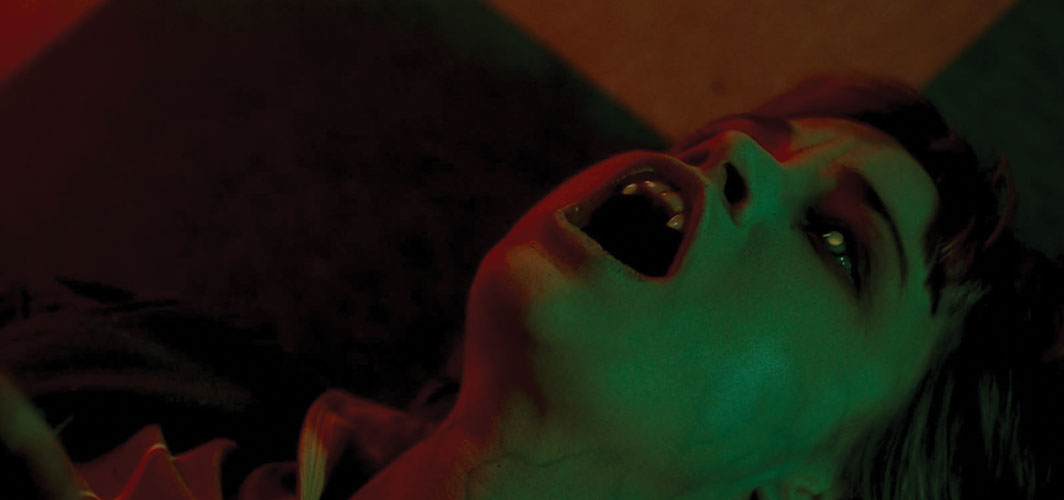
An awful mess of a movie, masquerading as a Stephen King adaptation
Stephen King has written an immense number of books. I, however, may have embarrassingly slipped on my dedicated readership over the past 10 years or so. Throughout my teens and into my thirties, I was reading everything King could put to paper, but these days, there’s only so much I can keep up with — especially with King releasing books every year. There are only three books that I have re-read, and just one that I have read more than twice — Salem’s Lot, King’s second published novel. I often wonder why that book in particular drew me in more than the others.
Salem’s Lot is fundamentally a tale of small-town life, spotlighting the diverse characters and stories unfolding on the outskirts of Portland, Maine. The story revolves around mysterious events and the arrival of sinister forces, focusing on the impact on the townspeople as a vampire presence begins to spread. It’s these little personal stories playing out that bring the sleepy little town to life. And yes, I think that’s what I love most about the novel: the people and the tales they tell as the town falls into darkness.
The 2024 Salem’s Lot film release, from Warner Bros. on the HBO Max platform, is the third attempt at bringing King’s novel to life. It’s also the first film adaptation, with the 1979 and 2004 versions both being TV miniseries. From the outset, trying to tackle King in a single film is a bold and risky move. When you think of some of the most successful adaptations of his work, they are generally long-form projects such as miniseries or multi-film adaptations. Many of the good films, such as The Shawshank Redemption (1994) and The Mist (2007), were adapted from short stories — better suited for the short runtime of films.
Considering two previous versions of Salem’s Lot went long-form, you have to ask yourself: what cuts need to happen to turn a 439-page book into a 1 hour 54-minute film? As it turns out, quite a lot. Probably too much.
The creative team behind the new adaptation
Let’s talk about the creative team behind this new adaptation. The screenwriter and director is Gary Dauberman, who had a stroke of luck adapting King’s IT in 2017 and 2019 when he tackled the scripts for this two-part film adaptation. He also penned the successful Annabelle series, directing the 2019 sequel Annabelle Comes Home. However, this is only his second film as a director.
There have been plenty of successful screenwriters turned directors, but let’s not mistake one discipline for the other. Writing and directing are very different jobs, and I can’t help but think that the folks over at HBO Max got a little confused about Dauberman’s previous King experience. Yes, he wrote the screenplay, but let’s not forget that Stephen King wrote the original novel. Dauberman adapted it into a screenplay with some changes in script and scenes.
What Dauberman has done with the Salem’s Lot script is damn near a crime. Dropping him into the director’s seat was always going to be a bad idea. More on this shortly.
Production delays and behind-the-scenes drama
I don’t know about all the politics behind this film — only the producers and director know for sure — but I do know that it did not make its original release date. After seeing it, it’s easy to understand why Warner Bros. and HBO Max struggled to decide what to do with this new adaptation.
During this time Warner was pruning movies from its future streaming lineup, cancelling films such as Batgirl and Coyote vs. Acme, both filmed but stuck in post-production. So when Salem’s Lot disappeared from the 2022 theatrical lineup, speculation began about whether it would also get cut.
In fact, it could be said that the film was only released due to pressure from King himself, who was very vocal about its lack of release two years later. I can only imagine that contracts with King prevented a complete cull — or maybe peer pressure was enough? Either way, King spoke out and the film was released, warts and all.
The screenplay disaster
How do I even start breaking down this film? Let’s begin with the screenplay.
For whatever reason — and this completely stumps me — Dauberman decided to completely rewrite the story. There are a few heartbeats in the film, even an odd line or two directly from King’s novel, but 99% is from Dauberman’s narrow imagination.
Stephen King has sold over 400 million copies of his 65 published books. He is undoubtedly one of the most read and successful authors ever. It takes a brave — if not naïve — person to say, “I think I can write that better”! It’s quite frankly disrespectful to the original book.
But here is the killer move: the new screenplay adds elements that never existed in the original novel. I understand removing things to tell a story better in film form, but adding new scenes seems madness.
In fact, the film’s major focus is a drive-in movie theatre — replacing the Marsten House as the film's most important location. It’s mentioned loudly in the opening credits when a newspaper announces, “Drive-In Opens for the Season” — a red flag for fans scratching their heads wondering if they’ve slipped into the wrong movie.
And yet, that damn drive-in keeps rearing its ugly head, leading to a showdown against the entire town — all of whom decide that the drive-in is perfect for vampires to hide during daylight hours. Barlow’s master plan? To hide in the back of a van at the movie theatre.
The screenplay is just an awful mess — huge amounts of exposition, awful dialogue, terrible choppy pacing and a damp squib of an ending. This is not Stephen King’s novel; this is Dauberman’s wet fart of an adaptation.
Casting and performances
Turning this script into a film was never going to be easy, but almost every casting decision here is a misfire.
Lewis Pullman as Ben Mears feels far too young for the role—and his performance is painfully flat. In King’s novel, Mears is a seasoned, haunted writer drawn back to his childhood town by tragic memories and a dark mystery. Here? He’s a writer no one knows about who spends most of the film doing… well, nothing.
Makenzie Leigh’s Susan Norton was hyped before release as a stronger, more involved character. In reality, she’s shoehorned into nearly every scene but does absolutely nothing meaningful in any of them.
This underwhelming trend continues across the board. Father Callahan, Straker, Gillespie—they’re all badly written, underused, and poorly acted.
Bill Camp’s Matt Burke and Jordan Preston Carter’s Mark Petrie are the only somewhat watchable performers, but even they struggle. Camp’s Burke is oddly flat given the traumatic events his character endures, while Carter is the closest thing to a standout—but he’s shackled by a weak script and lacklustre support.
In short: the cast can’t save this sinking ship.
Missing townsfolk & editing issues
Despite bad casting being an issue, the biggest problem is how most townsfolk have been relegated to name-drops or omitted entirely. This makes Salem’s Lot feel like a half-finished painting rather than a living breathing town.
Editing? The pacing is jarring at best with huge jumps in time (sometimes marked by text like “one week later,” mostly not), leaving your brain scrambling to figure out when we are exactly.
This ruins any slow degradation tension Salem’s Lot should have built as it shifts from bustling town to empty streets in a heartbeat — but since we barely knew anyone here or felt connection to them, no real loss.
The film feels heavily cut from a wider reel but done at an amateur level with zero polish. The colour grading looks awful: washed out yet oversaturated — like it spent one day in colour grade rather than weeks.
Direction & visuals
Dauberman stumbled over nearly every decision here — even his depiction of Barlow is terrible: an ugly blobby CGI mess compared to Reggie Nalder's infamous 1979 vampire look.
There are hints of better filmmaking scattered around — e.g., the bar scene where Jason Burke meets sickly Mike Ryerson is genuinely creepier than it deserved to be. But even that is ruined by direction telling Spencer Treat Clark to gurn stupidly down camera like a dog chewing on a toffee.
Final verdict
Salem’s Lot (2024) is, without doubt, one of the worst Stephen King adaptations I’ve seen this year — and I’ve witnessed some truly dreadful films. This is not King’s story or his characters; it is an amateur director’s misguided vision that misses the mark entirely.
When adapting King’s work, the key is to respect his words and bring his vision to life—not to rewrite or add unnecessary elements that dilute the original power. Instead, this film delivers poor acting, uneven pacing, clumsy editing, questionable CGI, and an overall look that feels rushed and uninspired.
After all the effort I’ve put into reviewing this mess, I’ll leave you with this simple truth:
You just can’t rewrite King.
Score
[ngg src="galleries" ids="23" display="pro_tile"]

Lallen
Luke "Lallen" Allen, founder and driving force behind Horror Land since 2016, combines his passion for writing with an insatiable love for horror, crafting a unique haven for genre enthusiasts. As head editor and writer, he transforms his lifelong fascination with the macabre into captivating content for fellow horror aficionados.
Recent Post


Follow Your Fear!
Special Features

HorrorLand Tales: Here are 12 Insanely Terrifying Goosebumps Stories

Love Hurts More After Death: Grief and Rebellion in Return of the Living Dead 3 (1993)

The Truth About 10 Scary Banned Horror Films

Dogman and 12 Jaw‑Dropping Crime Dramas Too Strange to Forget

Hereditary (2018) Cast — Where Are They Now?