
‘Undertone’ Review: Sound, Silence, and Sanity
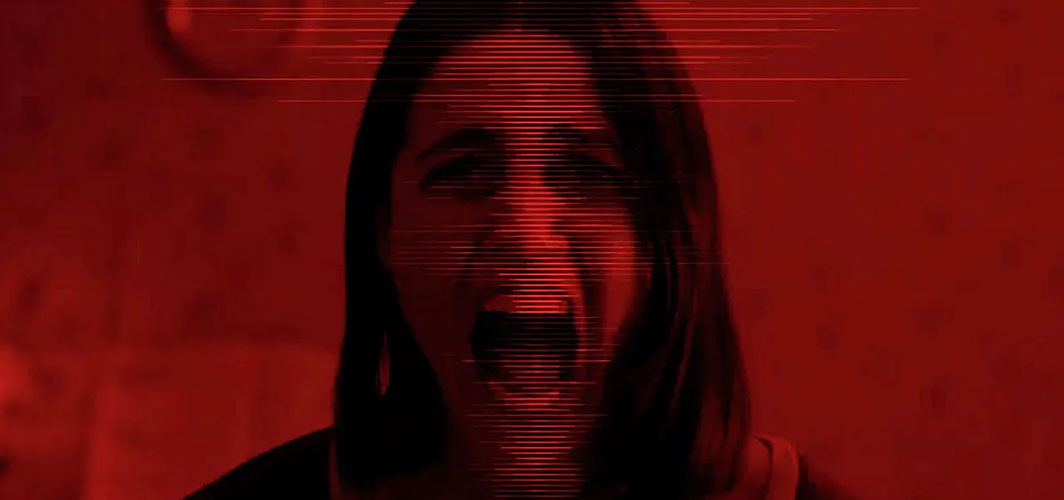
Low budgets have always been independent horror's secret weapon. Landmark films such as The Evil Dead (1981), The Blair Witch Project (1999), and Paranormal Activity (2007) emerged from financial drought, transforming severe resource constraints into some of the most deeply unsettling cinema ever committed to screen. When first-time writer-director Ian Tuason set out to make Undertone on a micro-budget of $500,000, inside the claustrophobic confines of his own childhood home in Toronto, he couldn't lean into high-octane creature effects or explosive set pieces. Instead, Tuason crafted something much rarer: a deeply sensory, psychological aural nightmare that weaponizes what you don't see.
The premise is deceptively simple. Evy (Nina Kiri) has put her life on hold to serve as the full-time caregiver for her terminally ill, nonverbal mother (Michèle Duquet). Hemmed in by religious relics, archaic furnishings, and the suffocating weight of domestic isolation, Evy’s only escape is The Undertone, a paranormal podcast she co-hosts with Justin (voiced by Adam DiMarco). While Justin leans hard into true-believer territory, Evy plays the steadfast skeptic—until an anonymous email lands in their inbox containing ten chilling audio clips of a sleep-talking woman.
The Masterclass of Sound Design
What elevates Undertone far above standard found-footage or haunted-house fare is its absolute commitment to its auditory landscape. The film opens with a moment of brilliant acoustic design: the sharp, blissful snap of Evy putting on her noise-canceling headphones, instantly plunging both her and the audience into absolute, vacuum-sealed silence. Gone is the mundane background noise of ticking clocks and refrigerator hums.
As the narrative progresses, that silence becomes a character in its own right. Tuason and his sound team utilize the full spectrum of Dolby Atmos to turn backward-played nursery rhymes ("Baa, Baa, Black Sheep" taking on a uniquely sinister edge) and distorted phone-in recordings into a claustrophobic trap. You aren't just watching Evy unravel; you are forced to share her sensory deprivation, listening intently to every creaking floorboard and ominous murmur, wondering if the noise is coming from the movie or your own hallway.
Rooted in Realism and Trauma
Beneath the supernatural trappings, which eventually spiral into ancient folklore concerning the child-stealing demon Abyzou, lies a deeply personal core. Tuason drew heavily from his own experiences caring for his dying parents, infusing the movie with a raw, bruising authenticity regarding caregiver burnout.
Nina Kiri anchors the entire production with a phenomenal, grounded performance. Evy’s complex web of Catholic guilt, exhaustion, and sudden existential dread regarding an unplanned pregnancy grounds the supernatural escalation. While certain third-act mythological turns and shadowy climaxes occasionally veer into familiar genre territory, invoking echoes of Paranormal Activity and The Blair Witch Project, the emotional weight of a daughter wrestling with the impending loss of her mother never wavers.
The Verdict
Undertone is not interested in cheap, easy jump scares; it prefers a slow-burn descent into paranoia that lingers long after the credits roll. It’s an immersive, brilliantly engineered debut that proves you don't need millions of dollars to rattle an audience, just a microphone, a dark room, and a masterclass in acoustic dread.

Hilly Horror
Hilly love of horror knows no bounds. As a massive fan of slasher and ghost films, she has watched all of the Wrong Turn and Paranormal Activity films. Now that's bravery at a scale we can't beat.
Recent Post


Follow Your Fear!
Special Features


Horror Death Scenes: DeepStar Six – Death by Decompression

Screams to Screens: Horror Legends in TV Commercials

Certainty Is The Monster: Why the Scariest House is Built by Your Own Mind

Rethinking The Terminator: How “John PRIME” Reshapes Sci-Fi’s Greatest Paradox

10 Creepy & Unsettling Websites Every Horror Fan Needs to Visit